 Pin It
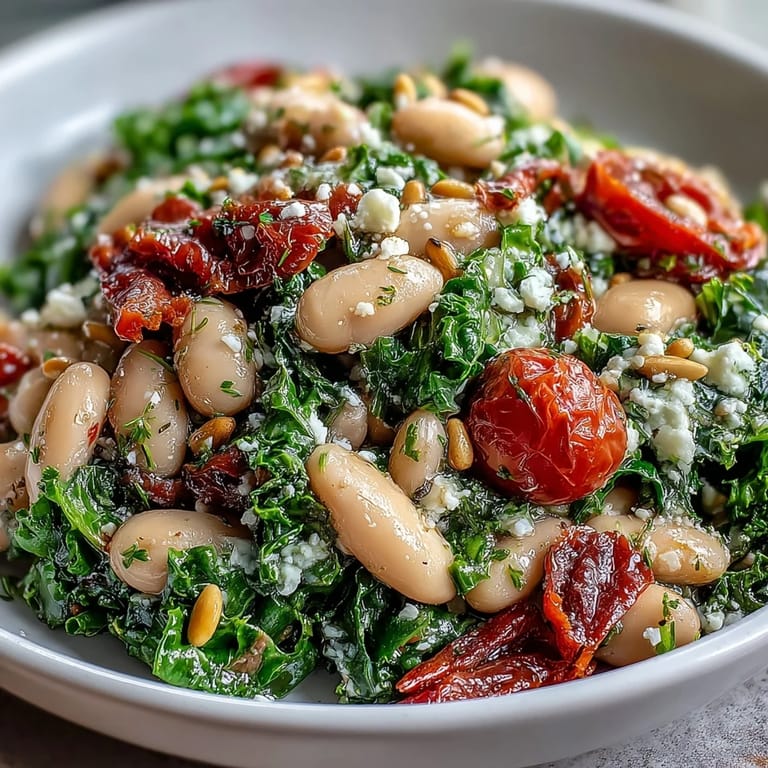
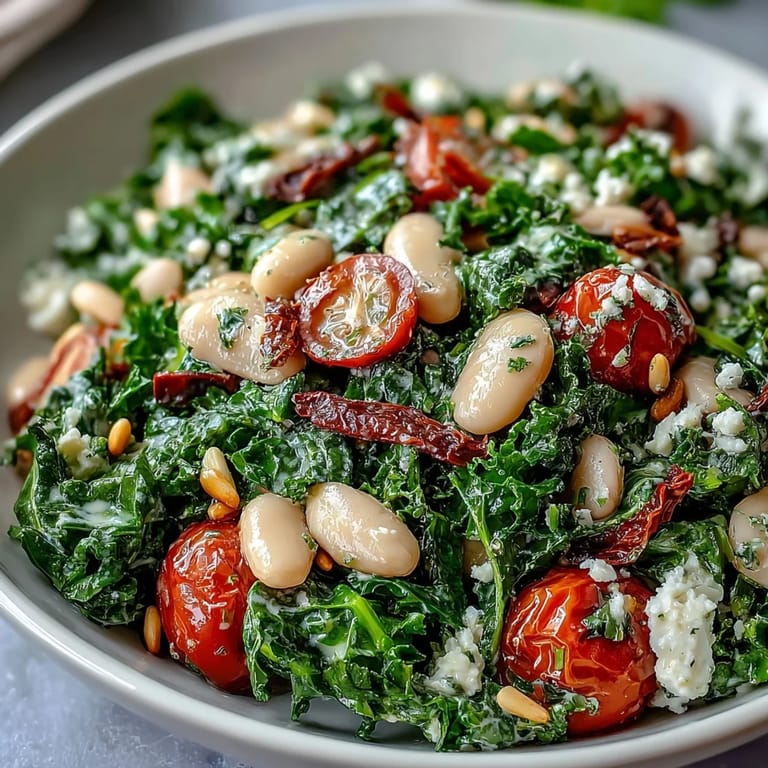
 There's something about a salad that tastes better when you've massaged the kale yourself—my hands were tingling from the lemon and garlic oils the first time I made this, and I realized that simple friction was transforming something ordinarily tough into something yielding and alive. That moment changed how I approached raw greens entirely. Now whenever I have a bunch of kale sitting in my crisper drawer looking a bit defiant, I know exactly what to do with it. This white bean and kale salad became my go-to on those days when I wanted something substantial but didn't want to spend hours cooking.
I made this for a potluck once where everyone else brought heavy casseroles and complicated sides, and watching people come back for seconds of a salad felt like a small victory. Someone asked for the recipe right there with a mouthful of kale, and I realized that good food doesn't need fanfare or fancy presentations to win people over. That salad bowl came home nearly empty, and I've been making it ever since for gatherings where I want to bring something that actually nourishes rather than just fills.
Ingredients
- White beans (15 oz can, drained and rinsed): These creamy, mild beans are the backbone that makes this salad feel like a complete meal rather than just rabbit food, and rinsing them removes that tinny canned taste.
- Kale (1 large bunch, about 6 cups chopped): Choose the curly variety if you can, as it holds up beautifully to massage and has more texture than the flat-leaf kind.
- Cherry tomatoes (1 cup, halved): They burst with sweetness and juice, balancing the earthiness of the beans and the slight bitterness of the kale.
- Red onion (1 small, thinly sliced): Slice it paper-thin so the sharpness mellows rather than punches, and soak it in ice water for 10 minutes if you find raw onion too aggressive.
- Toasted sunflower or pumpkin seeds (1/4 cup): Buy them already toasted to save yourself a step, and they add a nutty crunch that keeps the salad interesting bite after bite.
- Feta cheese (1/4 cup crumbled, optional): If you use it, let it sit out of the fridge for a few minutes so the salt and tang come through more clearly.
- Extra virgin olive oil (3 tbsp): This is where the salad gets its richness, so don't skimp or substitute with regular olive oil.
- Fresh lemon juice (2 tbsp): Squeeze it from real lemons rather than using bottled, as the brightness makes a noticeable difference.
- Dijon mustard (1 tsp): It acts as an emulsifier, helping the oil and lemon juice mingle into something cohesive rather than separating.
- Garlic clove (1 small, minced): One clove is enough to whisper flavor without overwhelming, and mince it finely so it distributes evenly.
- Sea salt (1/2 tsp) and black pepper (1/4 tsp): Taste as you go, since you can always add more but you can't take it back.
Tired of Takeout? 🥡
Get 10 meals you can make faster than delivery arrives. Seriously.
One email. No spam. Unsubscribe anytime.
Instructions
- Make the dressing first:
- Whisk together the olive oil, lemon juice, mustard, minced garlic, salt, and pepper in a small bowl or jar until the mixture looks slightly thick and emulsified. This takes about a minute of whisking, and you'll feel the consistency shift under your whisk.
- Massage the kale into submission:
- Put your chopped kale in a large bowl and pour half the dressing over it, then use your hands to rub and squeeze the leaves for a minute or two until they darken and soften dramatically. Your hands will smell incredible and the kale will go from tough to tender like magic.
- Build your salad:
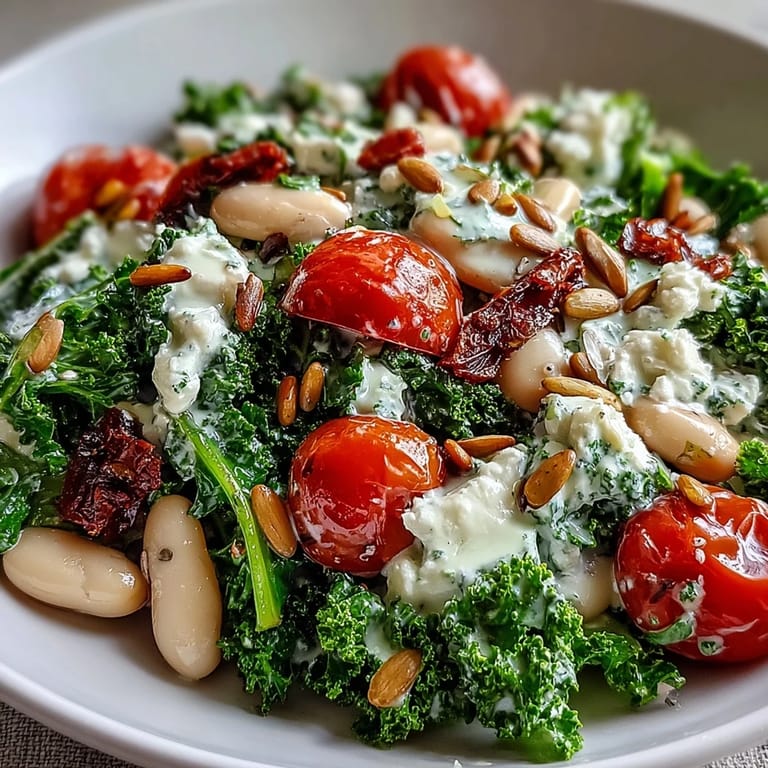
- Add the white beans, tomatoes, red onion, and seeds to the massaged kale, then drizzle with the remaining dressing and toss gently until everything is coated. The beans will break slightly if you're too aggressive, which is fine, but there's no need to pulverize them.
- Finish with feta if you're using it:
- Sprinkle the crumbled cheese over the top just before serving so it doesn't get lost in the tossing. Let the salad sit for five minutes if you have time, allowing the flavors to settle and mingle.
 Pin It
 There was an afternoon when my daughter came home from school tired and cranky, and I put a bowl of this salad in front of her without making a big deal about it. She ate the whole thing without complaint, and later asked if I could make it again, which felt like the highest compliment a parent could receive. That's when I understood that good food doesn't need to announce itself or dress itself up—it just needs to nourish and satisfy, and this salad does both quietly and thoroughly.
Make It Your Own
This salad is honestly a blank canvas, and I've added all sorts of things depending on what's lingering in my produce drawer or pantry. I've thrown in roasted chickpeas when I ran out of canned white beans, added crumbled crispy tempeh for extra substance, swapped the sunflower seeds for toasted walnuts or almonds, and even stirred in a handful of quinoa when I wanted to make it even more of a meal. The beauty is that the dressing is strong enough to hold everything together, so you can't really go wrong as long as you keep the basic formula of greens, beans, and bright dressing intact.
Dressing Magic
The dressing is really where this salad earns its wings, and I've learned that the ratio of acid to oil matters more than I initially thought. I used to make it too oily, which made the salad feel heavy, but once I settled on this balance of lemon juice to oil, everything clicked. The Dijon mustard deserves special mention because it's doing invisible work as an emulsifier, helping the oil and acid become friends rather than opponents.
Storage and Serving Wisdom
I like to store the salad and dressing separately if I know I'm eating it over a few days, though honestly the salad holds up beautifully even when they're together. The kale actually becomes sweeter as it sits, and the beans absorb the dressing flavors. Serve it at room temperature or straight from the fridge depending on your mood, and consider crumbling a piece of crusty bread on top for texture, or eating it with thick slices on the side for scooping.
- Make a double batch of the dressing and keep it in a jar in the fridge for drizzling over roasted vegetables or grains.
- If the salad seems dry when you go to eat it a day later, whisk together another tablespoon of olive oil and a squeeze of lemon to refresh it.
- This salad sings at room temperature, so take it out of the fridge for 10 minutes before serving if you like it that way.
 Pin It
 This salad has become my answer to the question of what to bring to potlucks, what to eat when I want something that feels both indulgent and virtuous, and what to make when I need to turn a few humble ingredients into something memorable. It's proof that sometimes the simplest meals, made with attention and intention, are the ones worth repeating.
Questions & Answers
- → Why massage the kale?
Massaging kale with dressing breaks down tough fibers, making the leaves tender and removing bitterness. This technique transforms raw kale into a silky, enjoyable texture perfect for salads.
- → Can I make this ahead?
Yes! This salad actually improves after sitting for a few hours as flavors meld. The dressed kale holds up beautifully. Add feta just before serving to maintain texture.
- → What beans work best?
Cannellini beans offer ideal creaminess, but Great Northern or navy beans work equally well. For variation, try chickpeas for a nuttier flavor profile or butter beans for extra richness.
- → Is this protein-rich enough as a main?
With 9g protein per serving, it's satisfying for light lunches. For heartier meals, serve with crusty bread, add grilled chicken, or top with hard-boiled eggs to boost protein content.
- → How long does it keep?
Stored in an airtight container, dressed leftovers stay fresh for 3-4 days. The kale remains crisp and flavors continue developing. Avoid freezing as texture becomes compromised.