 Pin It
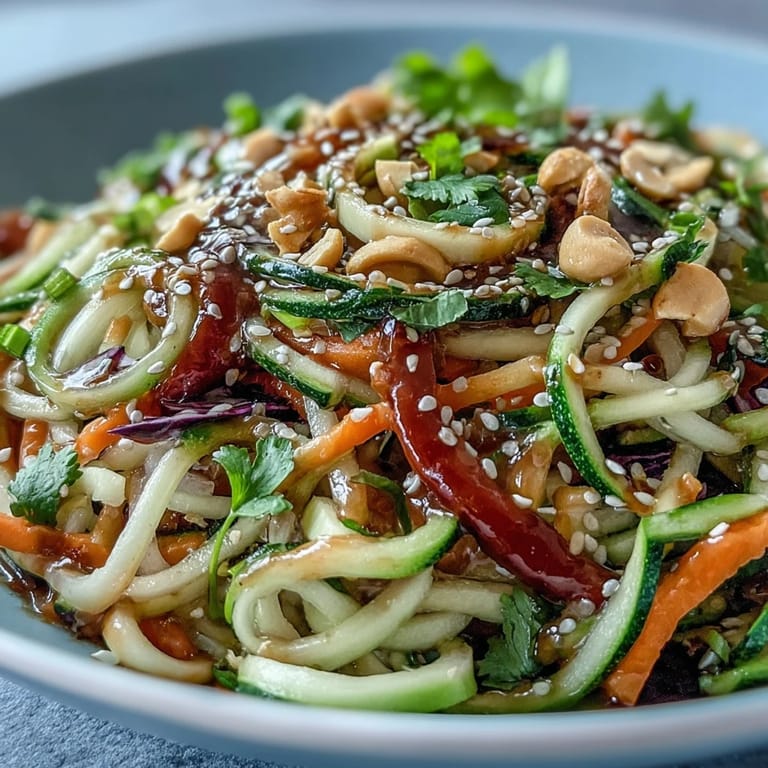
 Last summer, my friend showed up at my door with a spiralizer she'd just bought, convinced it would change our lives. We spent an afternoon turning vegetables into ribbons while she told me about this dressing her coworker made—something with sesame oil and ginger that apparently made even the pickiest eaters ask for seconds. That day, we created something so bright and fresh that we ended up making it three times that week, tweaking the proportions each time until we found our perfect balance.
I made this for a potluck where someone had just gone vegan, and I was nervous about what to bring. This salad showed up, and within minutes it was nearly gone while the heavier dishes sat untouched. The person who'd made the dietary change pulled me aside and said it was the first time in weeks someone had brought something that felt celebratory rather than apologetic—that stuck with me.
Ingredients
- Zucchini, spiralized: Choose firm specimens and spiralize them just before serving so they stay crisp and don't weep excess moisture into the salad.
- Carrot, spiralized: Raw carrots hold their sweetness and slight crunch beautifully in this preparation, creating a satisfying textural contrast.
- Red bell pepper, thinly sliced: The sweetness of red peppers balances the savory ginger dressing and adds both color and slight juiciness.
- Red cabbage, thinly shredded: Cabbage acts like a sponge for flavor and lasts longer than other vegetables if you need to make this ahead.
- Cucumber, spiralized: Add this just before serving if you're prepping in advance, as it releases water and can dilute the dressing.
- Green onions, thinly sliced: The sharp onion bite cuts through the richness of the sesame oil and keeps every bite interesting.
- Fresh cilantro, chopped: This isn't optional if you want authenticity—it brightens everything and ties the whole dish together.
- Toasted sesame oil: Don't skip the toasting step when you buy it; that deep, nutty flavor is what makes the dressing sing.
- Rice vinegar: Its gentle acidity won't overpower delicate spiralized vegetables the way other vinegars might.
- Low-sodium soy sauce or tamari: Tamari makes this genuinely gluten-free, and low-sodium lets you control the saltiness without overpowering the other flavors.
- Freshly grated ginger: Ground ginger is convenient but fresh makes all the difference—you can taste the brightness rather than just the heat.
- Maple syrup or honey: A touch of sweetness rounds out the spice and helps the dressing cling to the vegetables.
- Garlic, minced: One clove is all you need; too much will bully the delicate ginger and sesame notes.
- Lime juice: Fresh lime juice adds a final layer of acidity that keeps the salad from tasting heavy.
- Chili flakes: Optional but worth adding if you enjoy heat that lingers pleasantly without overwhelming your palate.
- Toasted sesame seeds: Sprinkle these on just before serving so they stay crunchy and don't absorb moisture from the dressing.
- Roasted peanuts or cashews: These add protein and richness; toast them yourself if you can for superior flavor.
Tired of Takeout? 🥡
Get 10 meals you can make faster than delivery arrives. Seriously.
One email. No spam. Unsubscribe anytime.
Instructions
- Spiralize and slice your vegetables:
- Set up your cutting board like an assembly line and get all your vegetables ready in one focused burst. This is the only real work the recipe requires, and it's oddly meditative once you find your rhythm.
- Build the dressing in a separate bowl:
- Whisk the sesame oil, rice vinegar, soy sauce, fresh ginger, maple syrup, garlic, lime juice, and chili flakes together until you see the sweetness starting to emulsify the oil. Taste it at this point—it should taste bold and a bit salty, because the vegetables will mellow it out.
- Combine vegetables and dressing:
- Pour the dressing over your prepared vegetables and toss gently but thoroughly, making sure every strand gets coated. Don't be timid here; the vegetables need that contact with the dressing to really sing.
- Let it rest and marry:
- Set the salad aside for 5 to 10 minutes and let the vegetables soften slightly while absorbing the dressing flavors. This quiet time transforms separate ingredients into a cohesive dish.
- Plate and garnish:
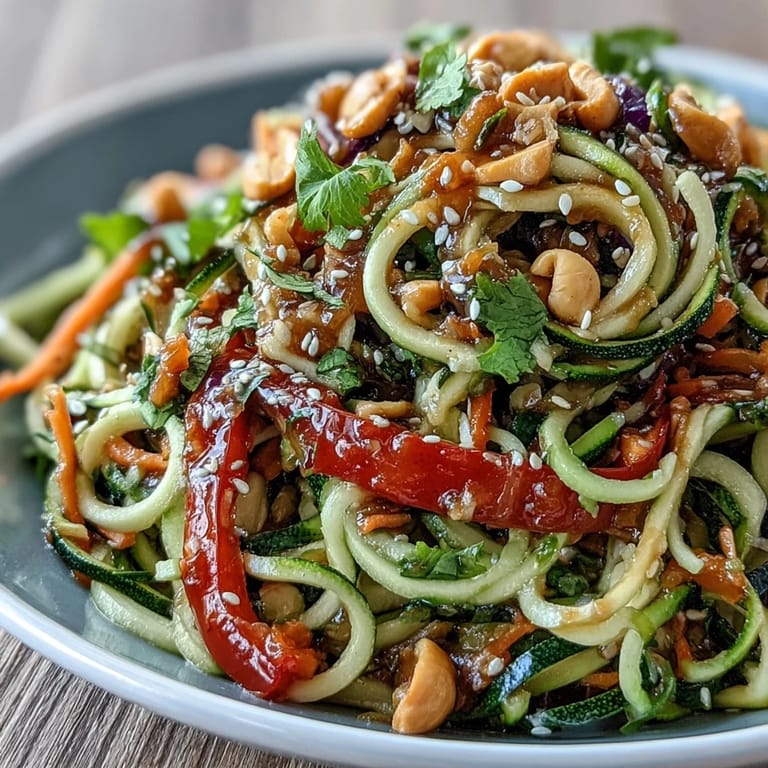
- Transfer to a serving platter and scatter the toasted sesame seeds and nuts over the top just before serving. Add extra cilantro if you're generous with fresh herbs like I am.
 Pin It
 One afternoon, my neighbor tasted this salad and asked if I could make it for her dinner party the next night. I did, and someone at her table asked for the recipe so earnestly that it felt like a real compliment—not the polite kind you forget about, but the kind that reminds you why you love feeding people.
Why This Works as a Complete Meal
This salad exists in that beautiful space where it's substantial enough to be lunch but light enough that you don't feel sluggish afterward. The combination of raw vegetables gives you real nutrition without any heaviness, while the dressing provides enough fat and salt to make it genuinely satisfying. I've found that adding baked tofu or chickpeas transforms it into a dinner option without changing the fundamental character of the dish.
Storage and Advance Preparation
Make the dressing up to three days ahead—it actually tastes better if the flavors have time to get to know each other. Prepare your vegetables earlier in the day, but keep them in separate containers until you're ready to assemble and dress the salad. The trick is combining everything no more than 15 minutes before serving if you want to preserve that crisp texture that makes this salad special.
Variations and Personal Touches
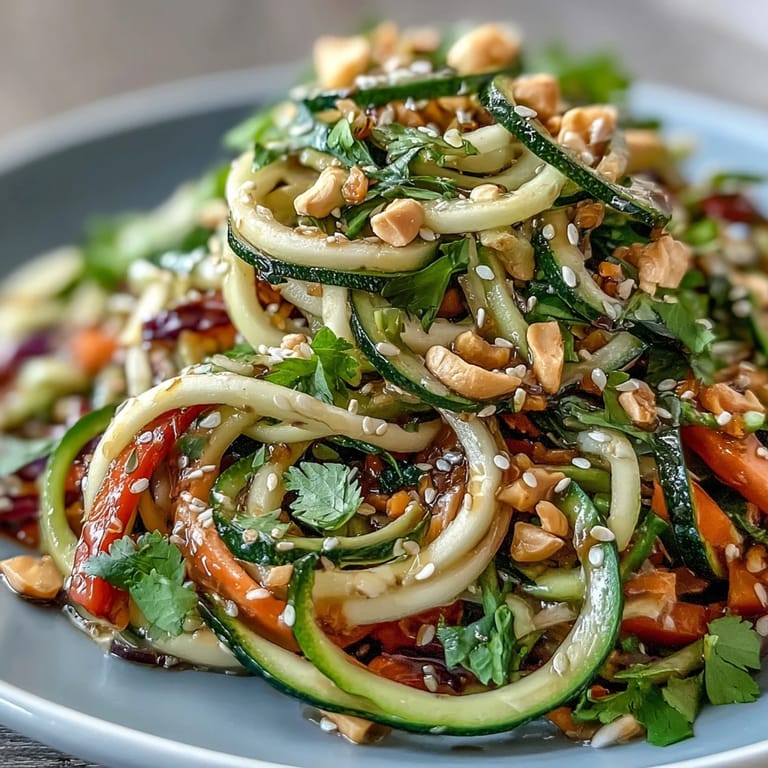
This recipe is genuinely flexible, which is part of why I return to it so often. Yellow squash, daikon radish, or even thinly shaved beets bring different flavors and colors without changing the fundamental structure. The dressing stays constant while everything around it shifts with the seasons and whatever looks good at the market that day.
- Try adding edamame or baked tofu if you want more protein without making the salad feel heavy.
- Swap the nut garnish based on what you have—sunflower seeds, hemp seeds, or almonds all work beautifully.
- Adjust the chili flakes up or down depending on your heat preference, and remember you can always add more but you can't take it back.
 Pin It
 This salad taught me that the simplest recipes often taste the best because there's nowhere to hide a mistake. When you treat each ingredient with respect and don't overcomplicate things, people actually notice.
Questions & Answers
- → Do I need a spiralizer to make this dish?
While a spiralizer creates the perfect noodle shape, you can use a julienne peeler or sharp knife to cut vegetables into thin strips instead.
- → How long does this salad stay fresh?
Best enjoyed immediately for optimal texture, though it will keep refrigerated for up to 2 days. The vegetables may soften slightly as they marinate in the dressing.
- → Can I prepare this ahead of time?
You can spiralize vegetables and prepare dressing up to 24 hours in advance. Store separately in the refrigerator and toss together just before serving.
- → What vegetables work best for spiralizing?
Zucchini, carrots, cucumbers, yellow squash, daikon radish, and beetroot spiralize beautifully. Avoid watery vegetables like tomatoes or soft produce like ripe avocados.
- → Is this suitable for meal prep?
Yes, portion into individual containers and store dressing separately. Add dressing just before eating to maintain the vegetables' crisp texture.