 Pin It
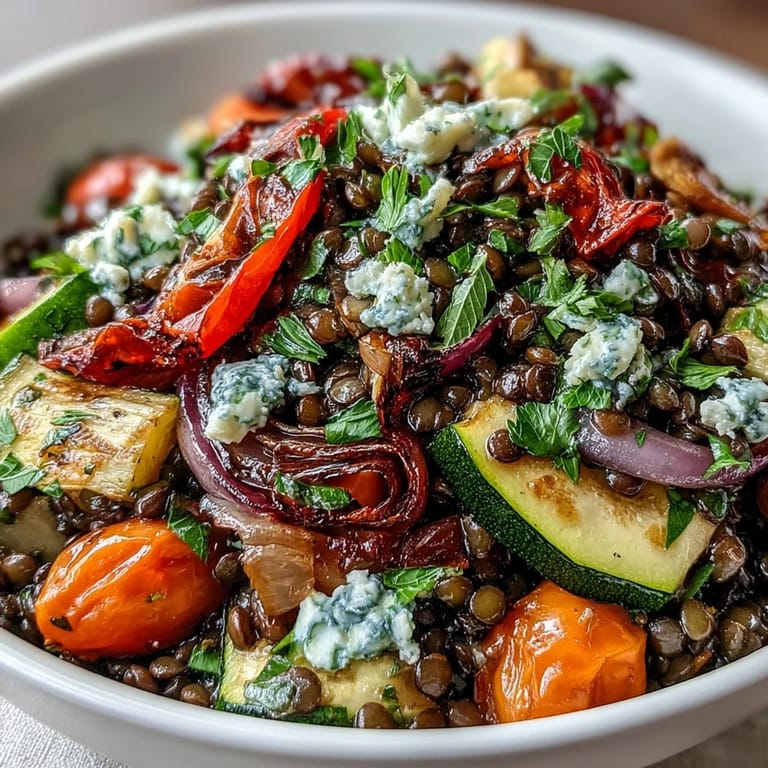
 I discovered black lentils by accident at a farmers market on a Tuesday morning, grabbing a bag thinking they were regular lentils. What made them special became obvious the first time I cooked them—they held their shape beautifully, had this earthy sophistication, and turned every bowl into something that felt restaurant-quality without fuss. The roasted vegetables came later, born from the simple idea of making something warm and substantial enough to eat alone but flexible enough to build around. Now this salad is what I reach for when I want something that tastes like I spent hours cooking but actually takes less than an hour from start to finish.
I made this for my sister's book club last spring, and she brought it again the following month because everyone kept asking for the recipe. Watching people go back for seconds, talking more about the salad than the book, felt like a quiet victory in the kitchen. That's when I realized this wasn't just healthy eating—it was the kind of food that makes people feel cared for.
Ingredients
- Black lentils (beluga): These tiny, shiny lentils hold their structure during cooking and have a subtle peppery flavor that regular green lentils can't match; rinsing them first removes dust and keeps them from splitting.
- Water: Use exactly three cups to ensure the lentils cook evenly without becoming waterlogged.
- Bay leaf: This quiet flavor builder infuses the cooking liquid with something aromatic and warm.
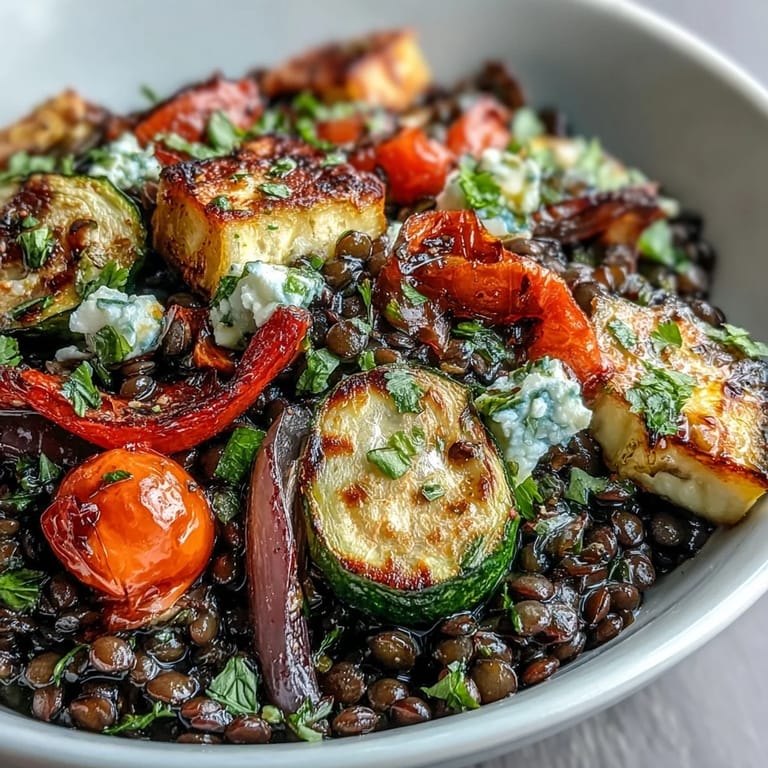
- Red bell pepper: The sweetness intensifies when roasted, creating a textural contrast against the earthy lentils.
- Zucchini: Slices caramelize at the edges when cut into proper dice; don't make pieces too thin or they'll disappear into the pan.
- Red onion: Wedges rather than minced pieces ensure they stay distinct and slightly crisp; the color bleeds beautifully into the salad.
- Carrot: Diced uniformly so everything roasts at the same pace and develops that golden-brown crust you're after.
- Olive oil (for roasting): Two tablespoons is the minimum needed to coat vegetables properly without making them greasy; more isn't better here.
- Cherry tomatoes: Add them raw after roasting to preserve their brightness and acidity.
- Fresh parsley: Chopped just before serving so it stays vibrant and aromatic rather than turning dark and muted.
- Feta cheese: Optional but it adds a salty, creamy counterpoint; omit entirely for vegan or use cashew crumbles as a substitute.
- Extra-virgin olive oil (for dressing): The quality here matters since it's raw; use one you'd actually enjoy on its own.
- Lemon juice: Always fresh; bottled tastes thin and metallic by comparison.
- Dijon mustard: An emulsifier that helps the dressing cling to the vegetables; yellow mustard won't have the same sharpness.
- Garlic: Minced finely so it distributes throughout the dressing without creating harsh pockets of raw garlic bite.
- Honey or maple syrup: A small amount rounds out the sharp edges of the lemon and mustard, creating balance.
Tired of Takeout? 🥡
Get 10 meals you can make faster than delivery arrives. Seriously.
One email. No spam. Unsubscribe anytime.
Instructions
- Preheat and prep:
- Set your oven to 425°F and arrange a baking sheet inside so it gets hot while you prepare the vegetables. This matters more than most home cooks realize—a hot sheet means your vegetables start caramelizing immediately rather than steaming.
- Season the vegetables:
- Toss your diced peppers, zucchini, red onion, and carrot with two tablespoons of olive oil, salt, and pepper in a bowl before spreading onto the hot baking sheet. Keep pieces roughly the same size so nothing burns while smaller pieces are still raw.
- Roast until caramelized:
- Spread everything in a single layer and roast for 25 to 30 minutes, stirring halfway through. You're looking for golden-brown edges and tender centers—the vegetables should have yielded to tenderness but still have structure.
- Cook the lentils:
- While vegetables roast, bring water, rinsed lentils, and a bay leaf to a boil in a saucepan. Immediately reduce to a gentle simmer and cook uncovered for 20 to 25 minutes, tasting at the lower end of the window to catch them before they fall apart.
- Drain and season warm:
- When lentils are just tender, drain them completely and discard the bay leaf. Stir in half a teaspoon of salt while they're still warm so the salt penetrates rather than sitting on the surface.
- Build the dressing:
- In a small bowl, whisk together extra-virgin olive oil, fresh lemon juice, Dijon mustard, minced garlic, and a half teaspoon of honey. Season with salt and pepper, tasting as you go—the dressing should taste bright and assertive since it will soften when combined with the salad.
- Bring it together:
- In a large bowl, combine warm lentils, roasted vegetables, halved cherry tomatoes, and chopped parsley. Drizzle the dressing over everything and toss gently but thoroughly so every element catches some of that tangy coating.
- Finish and serve:
- Crumble feta over the top if using, taste for seasoning, and serve warm or at room temperature. The flavors actually meld and deepen as it cools, so don't hesitate to make this ahead.
 Pin It
 Last fall, I made a large batch of this and brought it to a potluck where someone was newly vegetarian and felt nervous about what she could eat. Watching her face light up when she realized she could have something hearty and satisfying reminded me that good food isn't about restriction—it's about generosity. That moment shifted how I think about cooking vegetables.
Why Room Temperature Works Best
Serving this salad at room temperature rather than chilled actually allows the flavors to speak more clearly. When food is cold, your palate can't detect subtlety the same way, so the bright lemon dressing and earthiness of the lentils get muffled. I learned this by accident once when I made the salad the night before and forgot to refrigerate it—the next day it tasted infinitely better than when I'd served it cold right away.
Building Texture Into Every Bite
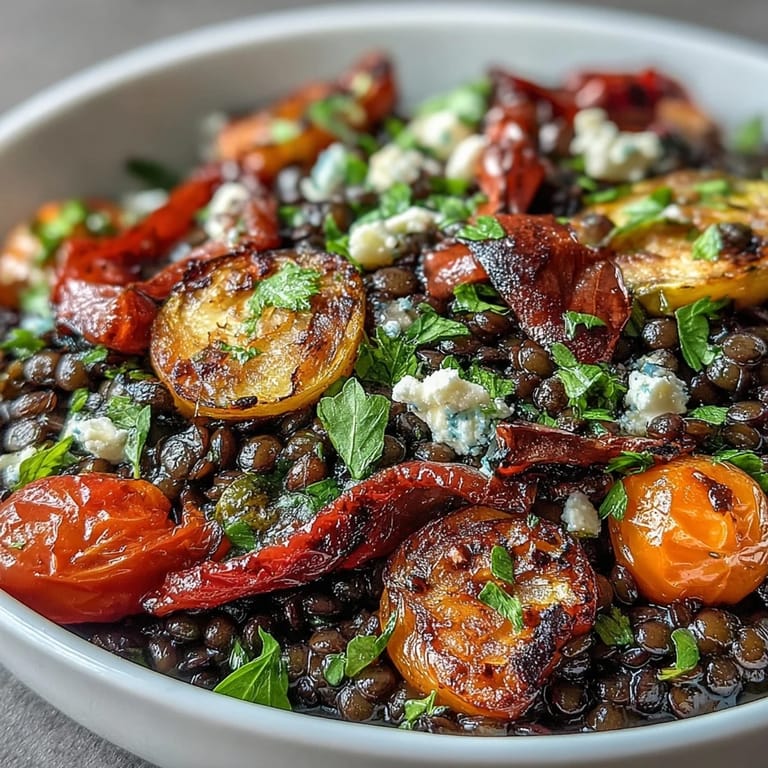
The real architecture of this salad lives in contrast—soft roasted vegetables against firm lentils, raw parsley cutting through cooked flavors, crumbly feta against creamy textures. Too many people treat salad as something that should be uniform, but the magic happens when each forkful feels slightly different. This is why stirring ingredients together matters less than layering them thoughtfully so they don't all blur together into one flavor.
Customizing Without Losing the Soul
This salad has a strong enough center that you can riff on it without it falling apart. I've made it with roasted squash instead of zucchini, added pomegranate seeds for brightness, and swapped the feta for crumbled goat cheese when that's what I had on hand. The foundation stays solid because the lentils and that dressing are non-negotiable, but everything else can shift with what's in your kitchen or what you're craving.
- Toss in arugula or baby spinach right before serving to add peppery freshness without wilting the greens.
- Grilled chicken or salmon transforms this into a more substantial main course that still feels light and summery.
- Make a double batch of the dressing and save it for drizzling over roasted vegetables or grain bowls all week.
 Pin It
 This salad became the dish I reach for when I want to prove to myself that eating well doesn't require sacrifice. It's proof that simple, honest cooking can be exactly what people need.
Questions & Answers
- → What makes black lentils special for salads?
Black beluga lentils hold their shape exceptionally well during cooking, unlike other varieties that can become mushy. Their earthy, slightly peppery flavor and striking appearance make them ideal for salads where texture and visual appeal matter.
- → Can I prepare this salad ahead of time?
Absolutely. This dish actually improves after a few hours as the flavors meld together. Store components separately and combine just before serving for the freshest texture. The lentils and roasted vegetables keep well in the refrigerator for up to 4 days.
- → What vegetables work best for roasting in this salad?
Root vegetables like carrots, sweet potatoes, and beets along with bell peppers, zucchini, and red onion work beautifully. Choose vegetables that roast at similar rates and won't become too soft or watery when cooked.
- → Is this dish suitable for meal prep?
Yes, it's excellent for meal prep. Cook lentils and roast vegetables in batch on Sunday, then portion out for the week. The dressing can be made ahead and stored separately. Add fresh herbs just before serving.
- → How can I add more protein to this salad?
Consider adding grilled chicken, salmon, or shrimp for extra protein. For vegetarian options, try quinoa, chickpeas, or extra nuts and seeds. The lentils already provide 11g per serving, making it quite satisfying on its own.
- → What's the best way to store leftovers?
Keep assembled salad in an airtight container in the refrigerator for up to 4 days. The flavors continue to develop over time. Serve cold or gently warmed, and add fresh herbs right before eating to maintain their bright flavor and color.