 Pin It
 My grandmother kept a jar of dried mung beans on her kitchen shelf year-round, and I'd watch her pull them down on gray afternoons when the house felt too quiet. She'd never measure anything precisely, just a knowing handful into the pot with whatever vegetables needed using. The first time I made this soup on my own, I realized it wasn't really her recipe I was after—it was that feeling of warmth spreading through the kitchen as the spices bloomed in hot oil, that particular kind of comfort that only comes when you're cooking something that's been made a thousand times before.
I made this for a friend who was recovering from the flu, and she later told me it was the first thing that didn't taste like medicine or obligation. She asked for the recipe immediately, which caught me off guard because honestly, I'd never thought to write it down. Now I make double batches on purpose, knowing it's the kind of food that slides into people's lives exactly when they need it most.
Ingredients
- Dried mung beans: Soak them overnight if you can—it's not just about cooking faster, it's about making them more digestible and letting them absorb flavors more easily.
- Onion, garlic, and ginger: This is your aromatic foundation, and finely chopping the onion matters because you want it to almost disappear into the soup rather than fight for attention.
- Carrot and tomato: The carrot adds a subtle sweetness while the tomato brings acidity that brightens everything; don't skip either one.
- Green chili: Optional but genuinely worth it if you like a whisper of heat that builds gently rather than shouting.
- Ground cumin and coriander: These two work together like old friends, creating warmth without overpowering the delicate beans.
- Turmeric powder: Beyond the golden color and earthy flavor, it's there for anti-inflammatory properties your body will appreciate.
- Mustard seeds: When they hit the hot oil, they pop and crack—that's your signal that the magic is beginning.
- Asafoetida (hing): A tiny pinch transforms everything; it's pungent raw but becomes mysteriously savory once it cooks.
- Water or vegetable broth: Broth adds depth, but water lets the spices and beans shine without competition.
- Fresh cilantro and lemon juice: These are not garnishes—they're the final notes that make you close your eyes on the first spoonful.
Tired of Takeout? 🥡
Get 10 meals you can make faster than delivery arrives. Seriously.
One email. No spam. Unsubscribe anytime.
Instructions
- Prepare your beans:
- Drain the soaked mung beans and give them a thorough rinse under cold water—this removes the starches and makes the final soup clearer and lighter. It takes 30 seconds but changes everything.
- Wake up the spices:
- Pour just a splash of oil into your pot and set it over medium heat, then add the mustard seeds and listen for that distinctive crackling sound. This is when the kitchen fills with anticipation.
- Build your flavor base:
- Once the mustard seeds settle down, add your chopped onion, minced garlic, and grated ginger all at once. Stir constantly for about three minutes until the onion turns translucent and releases its sweetness.
- Layer in the warmth:
- Now add the carrots, tomato, green chili if using, and all your ground spices at once—cumin, coriander, turmeric, black pepper, and that pinch of asafoetida. Let them toast together for two minutes so they lose their raw edge and become roasted and fragrant.
- Introduce the beans:
- Pour in your drained mung beans and then the water or broth, stirring to combine everything evenly. Bring the whole pot to a rolling boil, then immediately turn the heat down low.
- Let time do its work:
- Simmer uncovered for 35 to 40 minutes—the beans should go from firm to so tender they're almost falling apart, and the broth will thicken as the beans release their starches. You'll know it's ready when the first bean you taste practically dissolves on your tongue.
- Season with intention:
- Add your salt at the end and taste carefully, adjusting as needed because different broths and waters have different mineral content. Don't rush this step.
- Finish with brightness:
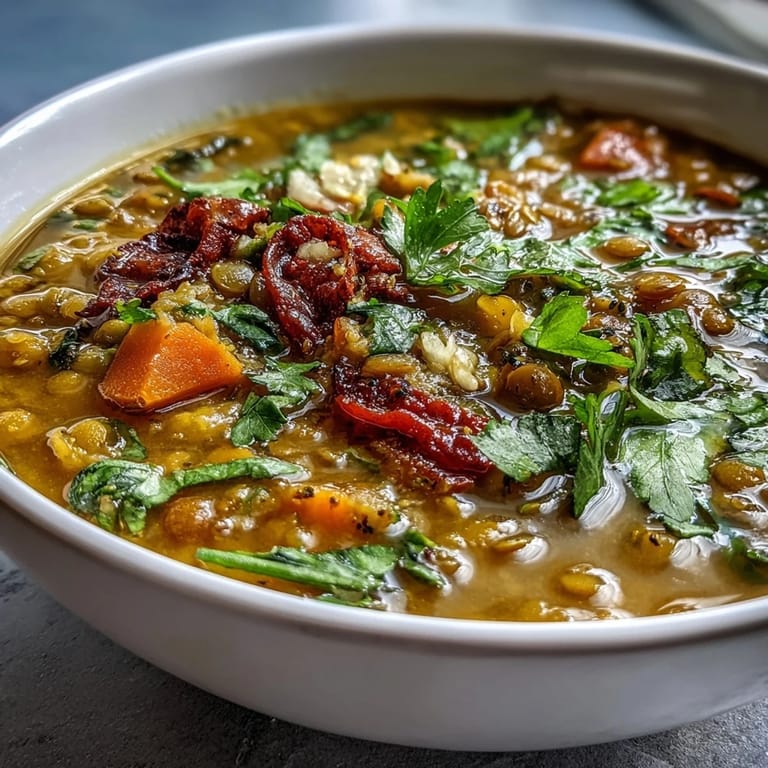
- Stir in the fresh lemon juice right before serving so it stays vibrant and alive, then crown each bowl with torn cilantro leaves. This final step is why people ask for the recipe.
 Pin It
 There's a moment in every pot of this soup when it stops being ingredients and becomes something whole, something that feels intentional and alive. My kitchen smells like cumin and ginger, and suddenly the afternoon shift or the heavy day just falls away, replaced by something simpler and truer.
The Texture Question
Some days I like my mung bean soup completely smooth and creamy, where the beans have surrendered entirely into the broth. Other days I want to feel the individual beans still holding their shape, just barely soft. If you're after creamier, take the back of a wooden spoon and gently press some of the cooked beans against the side of the pot when you're about five minutes from done—this releases their starches and thickens everything while still leaving some beans intact.
How to Serve It Right
This soup becomes a complete meal when paired with something to soak up the broth—steamed basmati rice, warm roti, or even crusty bread works beautifully. The combination makes it substantial enough for dinner while still feeling light enough for lunch the next day. Some people add a dollop of yogurt on top, which creates this cool creamy contrast against the warm spices.
Variations and Additions
Once you understand the foundation of this soup, it becomes endlessly adaptable without losing its essential character. The base of spices and beans stays constant, but everything else bends to what you have or what you're craving. I've made it with spinach stirred in during the final minutes, with coconut milk swirled in at the end, even with roasted cauliflower added for extra body.
- Add a handful of fresh spinach or kale in the last five minutes of cooking if you want extra greens without changing the fundamental flavor.
- Stir in a splash of coconut milk just before serving for richness and a subtle sweetness that plays against the spices.
- Top it with a squeeze of extra lemon juice and crispy fried onions if you want textural contrast and a touch of indulgence.
 Pin It
 This soup has become my answer to almost everything—a rough day at work, a friend who needs comfort, a moment when I need to slow down and remember that food cooked with intention is its own kind of medicine. Make it once and it'll find its way into your regular rotation, I promise.
Questions & Answers
- → Do I need to soak mung beans before cooking?
Yes, soaking dried mung beans for 4 hours or overnight helps them cook faster and more evenly. It also reduces cooking time and improves digestibility.
- → Can I make this soup in a pressure cooker?
Absolutely. Cook soaked mung beans with spices and water for about 15-20 minutes on high pressure, then let the pressure release naturally. The vegetables can be sautéed first before adding everything to the cooker.
- → What can I serve with mung bean soup?
This pairs beautifully with steamed basmati rice, warm naan or roti flatbread. A side of pickles or chutney adds nice contrast. For a lighter meal, serve with crusty bread.
- → How long does leftover soup keep?
Stored in an airtight container in the refrigerator, it keeps well for 4-5 days. The flavors often deepen and improve overnight. It also freezes well for up to 3 months.
- → Can I add other vegetables?
Definitely. Spinach or kale added during the last 5 minutes of cooking works wonderfully. You can also include diced potatoes, bell peppers, or green beans depending on what you have available.