 Pin It
 The first poke bowl I made was born from frustration, honestly. I'd been craving something fresh and bright on a weeknight, but I didn't want to spend hours in the kitchen. My partner mentioned a place nearby that served these colorful rice bowls, and I thought, why not try making it at home? That evening, I discovered that poke isn't just food—it's a canvas where every element gets a voice, and somehow they all harmonize on a simple bed of rice.
I made this for a small dinner party once, and something magical happened. Everyone arrived stressed from work, but the moment they started assembling their own bowls and tasting that first bite, the whole energy shifted. There's something about a meal where everyone gets to build their own story that brings people together in the simplest way.
Ingredients
- Sushi-grade salmon or tuna (400 g, diced): This is where quality truly matters—ask your fishmonger for the sushi-grade cut and don't settle for less.
- Soy sauce (2 tbsp): The backbone of your marinade, bringing that deep umami punch that makes everything taste intentional.
- Sesame oil (1 tbsp): A little goes a long way here; it adds a nutty warmth that sesame seeds alone can't deliver.
- Rice vinegar (1 tbsp for marinade, plus 2 tbsp for rice): It brightens everything it touches, cutting through richness with subtle elegance.
- Honey or agave syrup (1 tsp): Just enough to balance the acidity and add a whisper of sweetness to the marinade.
- Fresh ginger (1 tsp, grated): Freshly grated makes all the difference—bottled loses something essential about its bite and warmth.
- Sesame seeds (1 tsp, plus 1 tbsp toasted for garnish): Toast them yourself if you can; the aroma will convince you it's worth the extra minute.
- Sushi rice or short-grain rice (320 g): Regular rice works in a pinch, but sushi rice's slight stickiness creates the perfect foundation.
- Water (480 ml): Measure carefully—too much rice pudding, too little and it won't cook through.
- Sugar (1 tbsp): Just enough to enhance the rice's natural sweetness without tasting dessert-like.
- Salt (½ tsp): Season to taste; some soy sauce is saltier than others, so adjust as you go.
- Avocado (1 ripe one): Slice it just before serving or it'll brown; I learned this the hard way.
- Cucumber (1 medium, thinly sliced): The cool refreshment that keeps your palate clean between bites.
- Carrots (2 medium, julienned): Their natural sweetness and crunch add textural contrast that feels intentional.
- Edamame beans (100 g, shelled and cooked): Pop them directly from the pod if you can find them fresh; if using frozen, just thaw them.
- Radishes (4, thinly sliced): They bring a peppery snap that reminds your mouth you're eating something alive.
- Spring onions (2, thinly sliced): Slice them just before assembling so they stay perky and sharp.
- Nori sheet: Cut it into thin strips just before serving so it maintains that satisfying crunch.
- Spicy mayo (4 tbsp): Mix mayonnaise with sriracha to your heat preference; it's the delicious chaos that ties everything together.
- Pickled ginger and lime wedges (optional): These are your flavor wildcards, the finishing touches that make it yours.
Tired of Takeout? 🥡
Get 10 meals you can make faster than delivery arrives. Seriously.
One email. No spam. Unsubscribe anytime.
Instructions
- Rinse and prepare the rice:
- Hold the rice under cold running water and stir gently with your fingers until the water runs nearly clear. This removes the starch that would otherwise make everything gummy and lets the rice grains stay separate.
- Cook the rice:
- Combine rinsed rice with water in a medium saucepan, bring to a boil, then reduce heat to low, cover, and simmer for exactly 15 minutes. The steam trapped under the lid is doing the real work, so resist the urge to peek.
- Rest and season the rice:
- Remove from heat and let it steam covered for another 10 minutes. Gently stir in the rice vinegar, sugar, and salt while the rice is still warm so the grains absorb the flavor evenly.
- Make your marinade:
- Whisk soy sauce, sesame oil, rice vinegar, honey, and fresh ginger in a bowl until the honey dissolves. This is your liquid gold—taste it and remember this balance because it's the soul of the dish.
- Marinate the fish:
- Add your diced sushi-grade fish to the marinade, toss gently to coat, and refrigerate for 10 to 15 minutes. The timing matters; too long and the acid will start cooking the fish; too short and the flavors won't penetrate.
- Prep all your toppings:
- Slice your avocado, cucumber, radishes, and carrots while the fish marinates. Spring onions should be sliced last so they stay bright and sharp.
- Assemble your bowls:
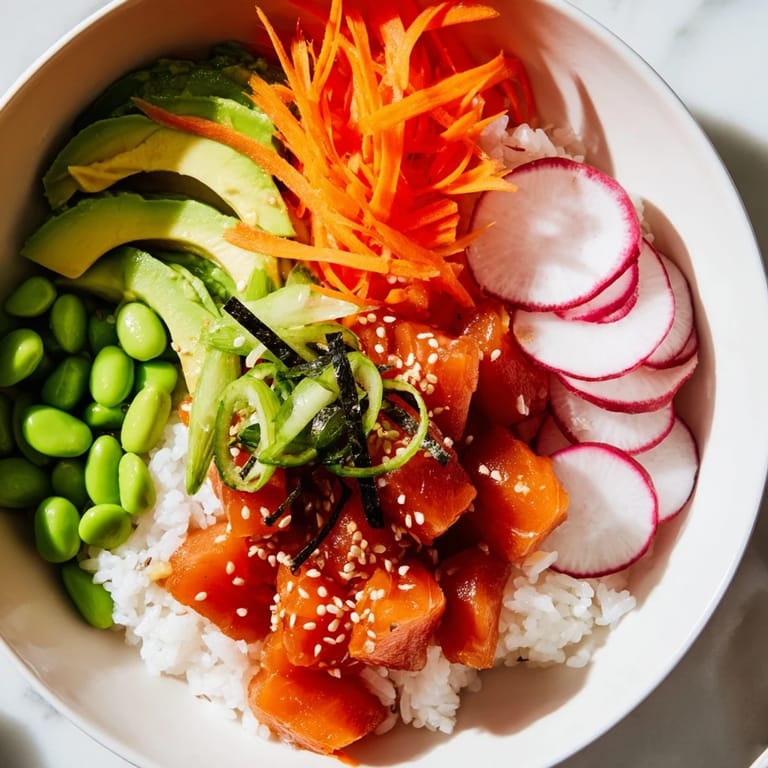
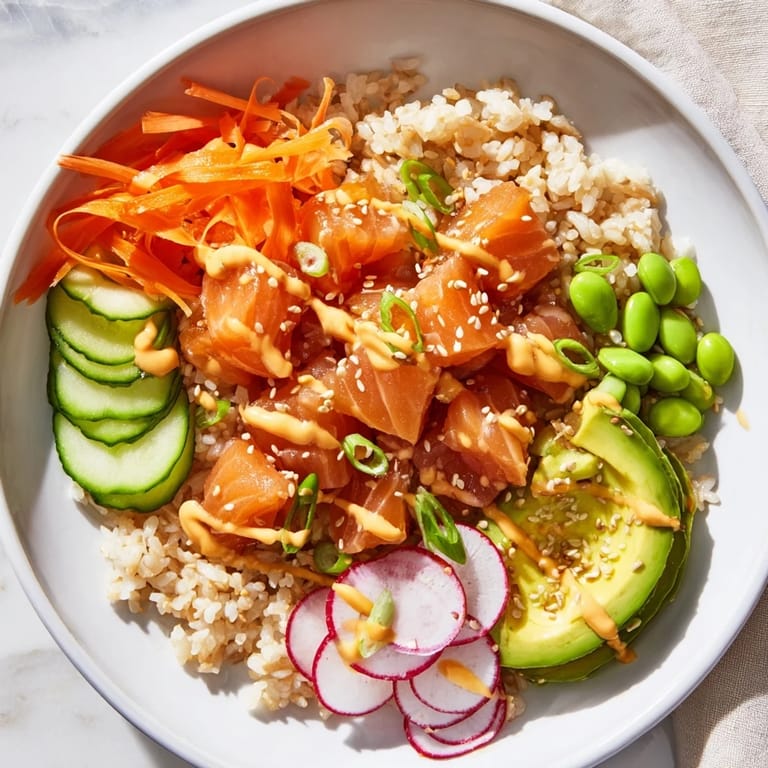
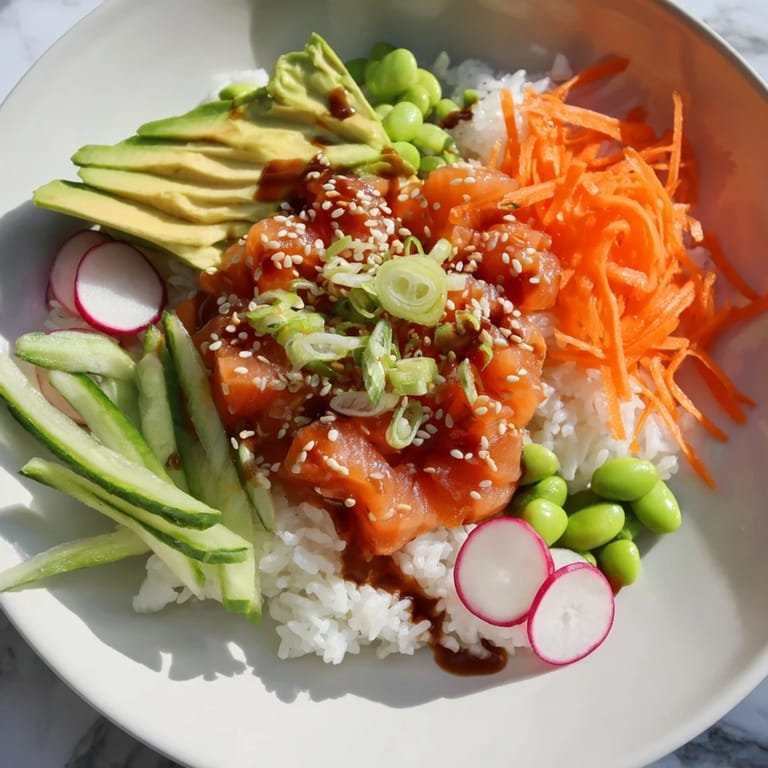
- Divide the cooled rice among four bowls, then arrange the marinated fish and toppings in sections around each bowl like you're painting a picture. Leave room for the sauce to find its way through everything.
- Garnish and finish:
- Top with nori strips, toasted sesame seeds, and microgreens, then drizzle with spicy mayo and a touch of soy sauce. Serve immediately with lime wedges and pickled ginger on the side.
 Pin It
 I'll never forget the moment my eight-year-old nephew declared this his favorite meal. He'd been skeptical about raw fish until he built his own bowl and realized he could actually choose what went in it. That single moment taught me that poke isn't just a recipe—it's a way of giving people agency over their own dinner, and somehow that makes it taste better.
The Art of Temperature Balance
The magic in a poke bowl lives in the temperature contrast. The rice should be warm enough that you can feel it's freshly made, but cool enough that it doesn't wilt the avocado or cook the fish. I learned to let my rice cool on the counter for about five minutes while I do my final prep, and that small pause completely changed how the bowl comes together. It's one of those lessons that sounds small until you taste the difference.
Making It Your Own
The beauty of poke is that it's infinitely adaptable without losing its soul. I've made versions with mango when summer felt too heavy, with roasted beets when I wanted something earthier, and even with marinated tofu when I had pescatarian friends visiting. The structure stays the same, but the personality changes completely.
Building Flavor Layers
Think of your poke bowl as layers of flavor that should build and surprise you. The salty-umami fish plays against the fresh crispness of vegetables, which plays against the cool creaminess of avocado, all balanced by the bright kick of spicy mayo and the earthiness of nori. This isn't random arrangement—it's an intentional conversation between textures and flavors that keeps evolving with every bite.
- Don't let any single element dominate; the goal is harmony, not loudness.
- If something tastes flat, it's usually missing acid or salt, so adjust your soy sauce or lime accordingly.
- Taste as you build and trust your instincts about what needs balancing.
 Pin It
 Every time I make this, I'm reminded that the best meals are the ones where everyone leaves feeling like they created something rather than just consumed it. Poke bowls do that naturally, and that's worth every bit of effort.
Questions & Answers
- → How do I cook the rice for this dish?
Rinse sushi rice under cold water until clear, then simmer with water for 15 minutes. After removing from heat, let it steam for 10 more minutes before seasoning with vinegar, sugar, and salt.
- → What is the best fish to use?
Sushi-grade salmon or tuna works best for freshness and texture, diced and marinated for 10–15 minutes with soy sauce and sesame oil.
- → Can I make a vegetarian version?
Yes, substitute the fish with marinated tofu or tempeh, prepared similarly for a flavorful alternative.
- → How should I prepare the toppings?
Slice avocado, cucumber, carrots, radishes, and spring onions thinly. Cook edamame if needed and garnish with nori strips, sesame seeds, and optional microgreens.
- → What sauces complement this bowl?
Spicy mayo made with mayonnaise and sriracha adds a creamy kick, along with extra soy sauce drizzled to taste. Pickled ginger and lime wedges are optional but enhance flavor.