 Pin It
 There's something about the weight of a deep dish pizza that makes you feel like you've accomplished something real in the kitchen. I discovered this Chicago style pizza during a late-night conversation with a friend who grew up there, and she described it with such longing that I knew I had to try it. The first time I pulled one out of the oven, the cheese was still actively bubbling and the crust had this golden, almost buttery sheen that immediately told me this wasn't going to be a typical pizza night. It became my go-to recipe whenever I wanted to feel like I was feeding people something substantial, something that required real effort and delivered real satisfaction.
I made this for a small group on a cold Sunday, and what started as a simple dinner turned into everyone hovering around the kitchen, drawn in by the smell of tomato and melting cheese. Watching someone take that first bite of thick, crispy crust topped with pools of molten cheese reminded me why I loved cooking in the first place. It wasn't fancy or complicated, but it felt generous.
Ingredients
- All-purpose flour: The foundation of your crust, and 3 1/4 cups gives you enough structure to hold all that cheese without getting soggy.
- Cornmeal: This 1/2 cup addition is the secret that gives deep dish its slightly gritty, authentic texture on the bottom of the crust.
- Active dry yeast: One packet (2 1/4 teaspoons) is your leavening agent, and patience with the rising time is what makes the dough light and airy instead of dense.
- Warm water: At 110°F, this temperature activates the yeast without killing it, so don't skip the thermometer moment.
- Olive oil and melted butter: Together they create that signature rich, almost crispy exterior that makes deep dish so addictive.
- Shredded mozzarella cheese: Use the full 3 cups, and don't be shy because it's your main event here.
- Parmesan cheese: The 1/2 cup of grated Parmesan adds a sharper, more complex note that elevates the whole thing.
- Crushed tomatoes: One 28 oz can is the backbone of your sauce, and I learned early on that simmer time matters more than complicated techniques.
- Garlic, oregano, and basil: These three together are how you avoid tasting like jarred sauce, so don't skimp on the dried herbs.
- Optional toppings: Pepperoni, mushrooms, bell peppers, and olives give you flexibility to build your version.
Tired of Takeout? 🥡
Get 10 meals you can make faster than delivery arrives. Seriously.
One email. No spam. Unsubscribe anytime.
Instructions
- Wake up the yeast:
- Combine warm water and yeast in a bowl and wait 5 minutes until it foams and smells alive. This visual confirmation that your yeast is active saves so much disappointment later.
- Build your dough:
- Mix in flour, cornmeal, salt, olive oil, and melted butter until a shaggy dough forms, then knead for 5 to 7 minutes until it becomes smooth and slightly elastic. Your hands will know when it's ready because it'll feel less sticky and more cooperative.
- The first rise:
- Place the dough in a greased bowl, cover it, and let it sit for an hour until it's roughly doubled in size. Don't rush this part because the rise is where the flavor develops and the texture becomes tender.
- Make your sauce:
- Heat olive oil in a saucepan, add minced garlic, and sauté for just a minute until fragrant, then pour in crushed tomatoes and seasonings. Simmer for 20 minutes, letting the flavors meld into something that tastes way better than the sum of its parts.
- Prepare your pan:
- Preheat the oven to 425°F and generously grease a 12 inch deep dish pizza pan with olive oil. A cake pan works too if you don't have a pizza pan, and this is your chance to really go all in on the oil.
- Layer one: dough and cheese:
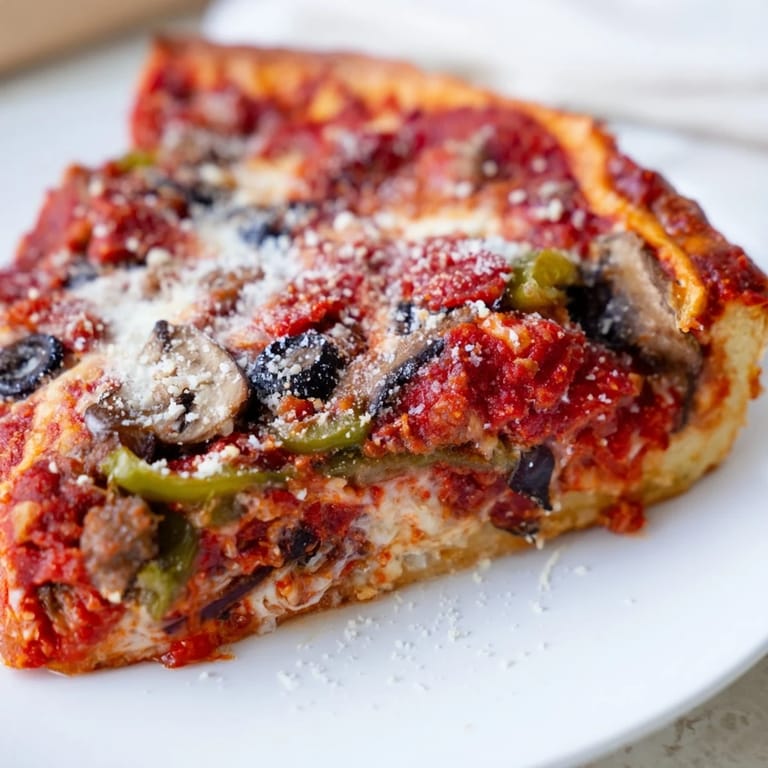
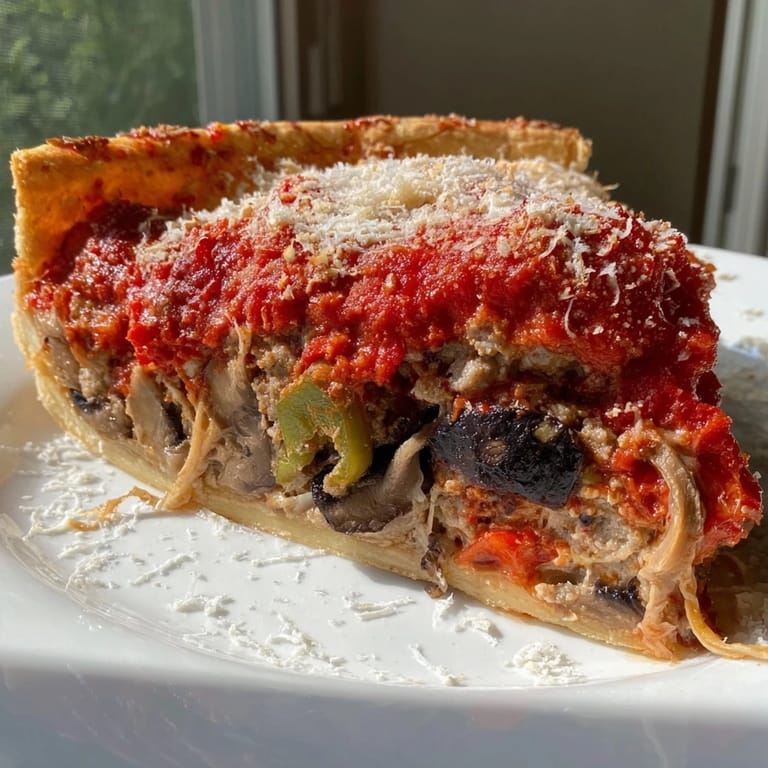
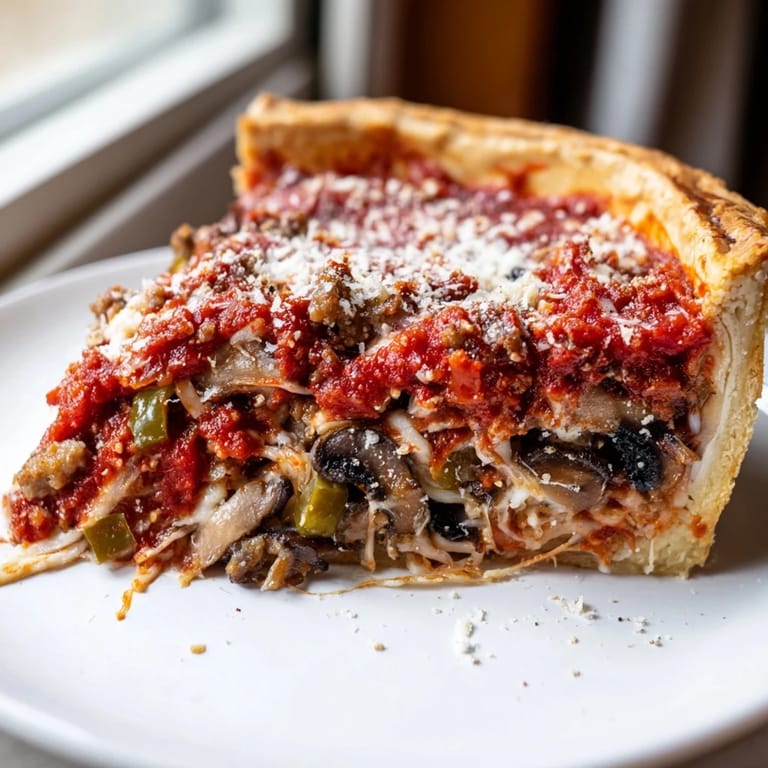
- Press the risen dough into your oiled pan, pushing it up the sides to create that characteristic high edge, then scatter the mozzarella evenly over the base. This is the moment that starts to look like an actual deep dish pizza.
- Layer two: toppings:
- Add your chosen toppings on top of the cheese in whatever proportion feels right to you. The cheese below acts as a buffer, keeping everything from sinking into the sauce.
- Layer three: sauce and finish:
- Pour the tomato sauce evenly over the toppings and finish with a generous sprinkle of Parmesan cheese. The sauce goes on top, not bottom, which is what makes this different from every other pizza you've probably made.
- The bake:
- Slide it into the oven for 35 to 40 minutes until the crust is golden and the sauce actively bubbles at the edges. If the crust starts browning too fast, cover the edges with foil for the last 10 minutes.
- The rest:
- Let the pizza sit for 10 minutes before slicing because cutting too early means the toppings slide around and you lose that beautiful structure. This waiting period is harder than the baking, but it matters.
 Pin It
 The best memory I have with this pizza is when my neighbor came over during the rising time and asked what I was making. After I explained the whole process, she decided to order takeout instead, but two hours later when that pizza came out of the oven golden and steaming, she suddenly became very interested in trying a slice.
Why This Pizza Works
Deep dish pizza isn't just about loading more cheese and sauce on top of a regular pizza. The thick crust needs time to puff up and develop flavor, and the technique of layering everything cheese first means the toppings stay suspended instead of sinking into the sauce. The cornmeal in the dough isn't purely for texture; it also helps the bottom of the pizza crisp up in the oven and makes it easier to remove from the pan.
Making It Your Own
I've made this pizza dozens of ways, and the thing I learned is that deep dish is forgiving as long as you respect the basic structure. You can swap out mozzarella for a blend with provolone if you want richer flavor, or add fresh basil after it comes out of the oven for brightness. The vegetarian version works just as well as the meat version, and I've had people who usually order plain pepperoni get genuinely excited about a deep dish loaded with mushrooms and olives.
Timing and Serving
The beauty of this recipe is that most of the work is passive rising time, so you're not actually in the kitchen the whole two hours. Serve it with a simple salad and a light Italian red wine like Chianti, and suddenly you've created an entire meal worth remembering.
- If you're short on time, store-bought pizza dough will work, though homemade is genuinely worth the effort.
- Leftovers reheat beautifully in a 350°F oven for about 10 minutes, and cold deep dish pizza the next morning is its own kind of pleasure.
- Make sure your deep dish pan is at least 2 inches deep or the pizza will overflow slightly, which I learned the hard way once.
 Pin It
 This pizza has become my answer to the question of what to make when I want to impress people without fuss. It's the kind of dish that fills your kitchen with the kind of smell that makes neighbors ask questions.
Questions & Answers
- → What makes deep dish pizza different from regular pizza?
Deep dish pizza features a thicker, buttery crust that rises higher on the edges, creating a deep pan for generous layers of cheese, sauce, and toppings.
- → Can I prepare the dough in advance?
Yes, you can prepare the dough a day ahead and refrigerate it to allow slow fermentation, enhancing flavor and texture.
- → How do I avoid a soggy crust with the sauce?
Ensure the dough is well-baked before adding sauce, and spread the cheese layer evenly to create a barrier that prevents sogginess.
- → What toppings work best with this style?
Mushrooms, bell peppers, olives, and pepperoni or Italian sausage complement the rich cheeses and tomato sauce well.
- → Is it possible to make a vegetarian version?
Omitting meat toppings and adding more vegetables like mushrooms and peppers creates a delicious vegetarian variation.
- → How long should the pizza rest before serving?
Resting for about 10 minutes allows the layers to settle and makes it easier to slice and serve.