 Pin It
 My neighbor Sofia invited me over one rainy Saturday, and I watched her fold tiny pockets of pasta with the kind of ease that comes from decades of practice. She taught me that making ravioli isn't about perfection, it's about rhythm and patience. The dough rested on her counter under a damp towel while we drank espresso and talked about her garden. By the time we filled and sealed each piece, I understood why homemade pasta feels like a conversation between your hands and the ingredients. That afternoon changed how I thought about cooking from scratch.
I made these ravioli for my sister's birthday dinner, and she cried when she saw the little squares lined up on the floured baking sheet. She said it reminded her of our grandmother's kitchen, even though neither of us had ever watched her make pasta. Sometimes food carries memories we didn't know we had. We ate them with too much Parmesan and laughed about how our hands were cramping from sealing edges. It became the dish I make when I want someone to feel loved.
Ingredients
- All-purpose flour: The foundation of your dough, and using the right amount ensures it's workable without being sticky or tough.
- Large eggs: They bind the dough and give it that golden color and rich flavor you can't fake with water-based doughs.
- Ricotta cheese: Choose whole milk ricotta for creaminess, and if it seems watery, drain it in cheesecloth for 20 minutes before mixing.
- Fresh spinach: Wilting it first and squeezing out every drop of moisture is the difference between a perfect filling and a soggy disaster.
- Parmesan cheese: Freshly grated makes the filling sing, and never skip it because it adds the salty, nutty backbone.
- Egg yolk: This binds the filling together and keeps it from oozing out during cooking.
- Nutmeg: Just a whisper of it makes the ricotta taste like it came from a Italian nonna's kitchen.
- Marinara sauce: Homemade is lovely, but a good jarred sauce works beautifully when you're short on time.
- Garlic: Sautéing it in olive oil before adding the sauce creates a fragrant base that wakes up every bite.
- Fresh basil leaves: Torn at the last second, they add a pop of color and that unmistakable summer sweetness.
Tired of Takeout? 🥡
Get 10 meals you can make faster than delivery arrives. Seriously.
One email. No spam. Unsubscribe anytime.
Instructions
- Make the Pasta Dough:
- Mound your flour on a clean counter and create a well in the center like a little volcano, then crack in the eggs and salt. Use a fork to whisk the eggs gently, pulling in flour bit by bit until a shaggy dough forms, then knead it with your palms for 8 to 10 minutes until it's smooth and springs back when poked.
- Let the Dough Rest:
- Wrap it tightly in plastic wrap and let it rest for 30 minutes at room temperature. This relaxes the gluten and makes rolling so much easier.
- Prepare the Filling:
- Steam or sauté your spinach until wilted, then drain it and squeeze out every bit of moisture using a clean kitchen towel. Mix it with ricotta, Parmesan, egg yolk, nutmeg, salt, and pepper until it's creamy and well combined.
- Roll the Pasta Sheets:
- Cut your dough in half and keep one piece covered while you work with the other. Roll it out with a pasta machine or rolling pin until it's thin enough to see your hand through, about 1/16 inch thick.
- Fill and Shape the Ravioli:
- Lay out one sheet of pasta and place teaspoons of filling about 2 inches apart, then brush the edges with water. Drape the second sheet over the top and press firmly around each mound to seal, then cut into squares and press the edges with a fork.
- Cook the Ravioli:
- Bring a large pot of salted water to a gentle boil and cook the ravioli in batches for 3 to 4 minutes. They'll float to the surface when they're ready, so lift them out gently with a slotted spoon.
- Prepare the Marinara Sauce:
- Heat olive oil in a saucepan over medium heat and sauté minced garlic until fragrant, about a minute. Add your marinara sauce, season with salt and pepper, and let it simmer for 5 minutes to marry the flavors.
- Plate and Serve:
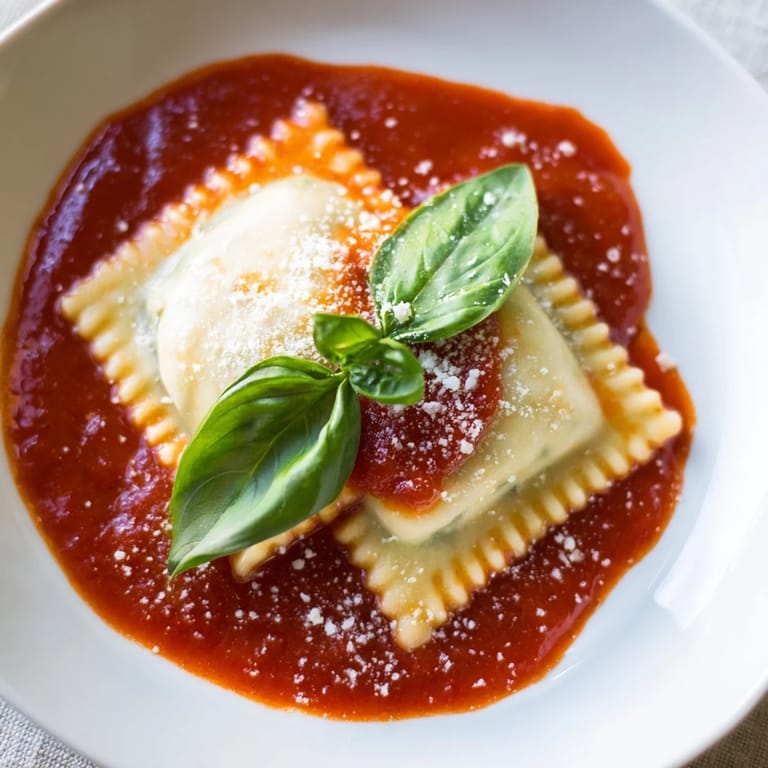
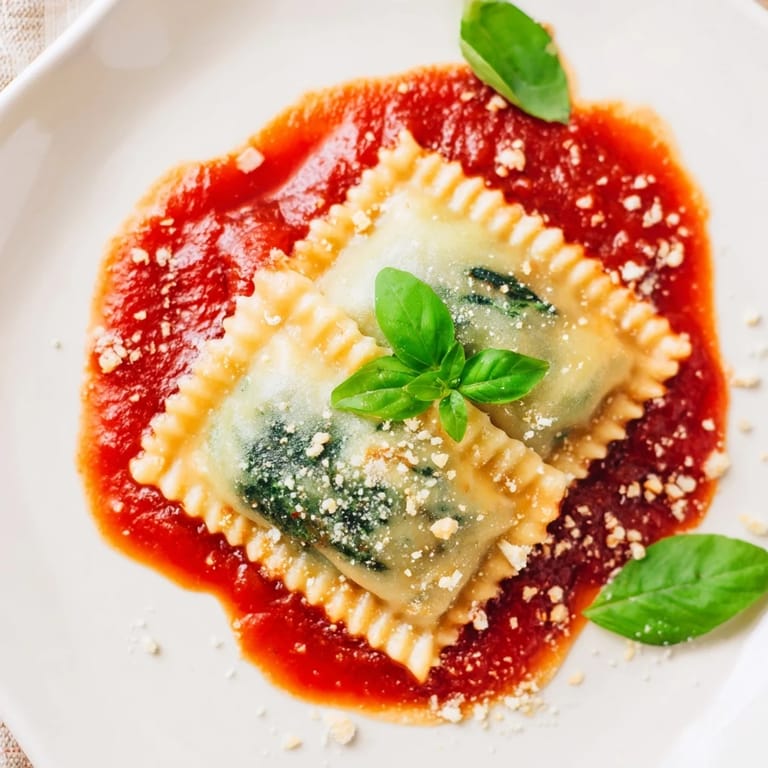
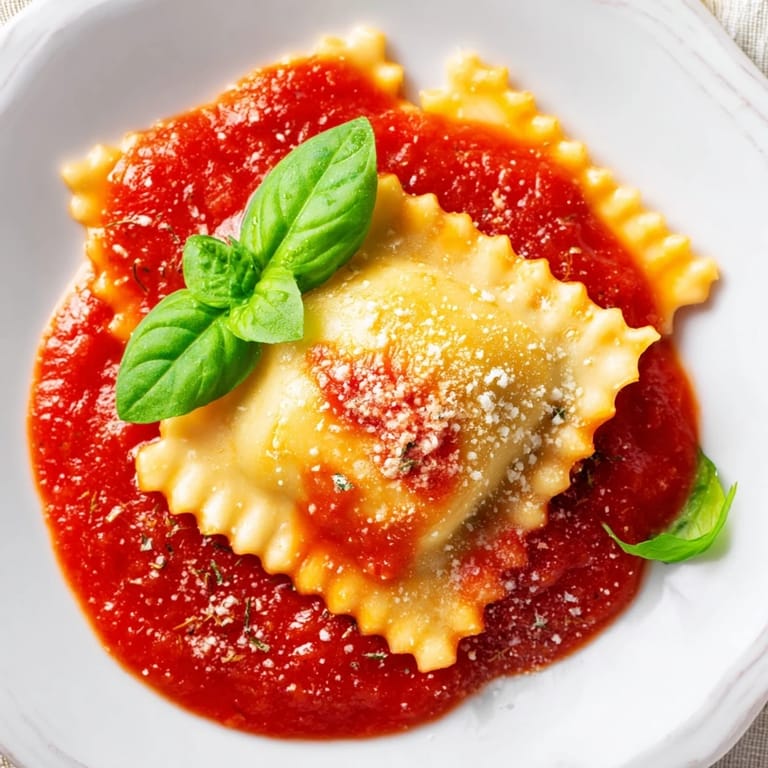
- Spoon sauce onto each plate, nestle the hot ravioli on top, and finish with more sauce, torn basil, and a generous shower of Parmesan. Serve immediately while everything is steaming.
 Pin It
 One evening I served these ravioli to friends who'd never seen homemade pasta before, and they got quiet in that way people do when food surprises them. Someone said it tasted like something their mom used to make, even though his mom never cooked Italian food. I realized then that certain dishes speak a language deeper than cuisine or culture. They just taste like care.
How to Store and Reheat
Uncooked ravioli freeze beautifully if you lay them in a single layer on a parchment-lined baking sheet until solid, then transfer them to a freezer bag. They'll keep for up to three months, and you can cook them straight from frozen by adding an extra minute or two to the boiling time. Leftover cooked ravioli can be stored in the fridge for up to two days, and I like to reheat them gently in a pan with a bit of butter or extra sauce rather than microwaving. The texture stays better that way, and you can get a little crisp on the edges if you're into that.
Swaps and Variations
If you want to switch things up, try adding sautéed mushrooms to the filling or swap the spinach for kale or chard. A brown butter sage sauce is a classic alternative to marinara and takes only minutes to make. You can also fold in some lemon zest and a handful of fresh herbs like parsley or chives for a brighter filling. I've even made a version with roasted butternut squash and ricotta that's perfect for fall, and it pairs beautifully with a drizzle of balsamic reduction.
Serving Suggestions
These ravioli shine when served simply, but a crisp green salad with lemon vinaigrette and some crusty bread for mopping up sauce make it a complete meal. A glass of chilled Pinot Grigio or a light Chianti brings out the richness of the ricotta and balances the acidity of the marinara. If you're feeding a crowd, set out extra Parmesan, red pepper flakes, and fresh basil so everyone can customize their plate.
- Make extra filling and use it as a dip for toasted baguette slices.
- Double the batch and freeze half for a night when you need comfort food fast.
- Pair with roasted vegetables or a simple arugula salad for a lighter balance.
 Pin It
 There's something deeply satisfying about pulling a tray of homemade ravioli from the fridge and knowing you made every part of it with your own hands. I hope this recipe brings as much joy to your table as it has to mine.
Questions & Answers
- → Can I prepare the ravioli in advance?
Yes, you can freeze uncooked ravioli for up to 3 months. Place them on a baking sheet, freeze until solid, then transfer to a freezer bag. Cook directly from frozen, adding 1-2 extra minutes to the cooking time.
- → What's the best way to seal ravioli edges?
Use a fork to press and crimp the edges firmly after placing the top pasta sheet. This creates both a decorative pattern and ensures a tight seal to prevent filling from escaping during cooking.
- → How do I know when ravioli are perfectly cooked?
Ravioli are done when they float to the surface and cook for an additional 30-60 seconds. Fresh ravioli typically take 3-4 minutes, while frozen ones may need 5-6 minutes total.
- → Can I use different cheeses for the filling?
Absolutely. You can incorporate mascarpone, Romano cheese, or fresh mozzarella. Adjust quantities slightly to maintain the filling's consistency and flavor balance.
- → What wine pairs well with this dish?
A crisp white wine like Pinot Grigio complements the delicate spinach and cheese filling beautifully. Alternatively, try Vermentino or a light Chianti for a red option.
- → How do I prevent the pasta dough from drying out?
Keep unused dough wrapped in plastic wrap and cover rolled sheets with a damp kitchen towel while working. This prevents the surface from becoming dry and cracked during assembly.