 Pin It
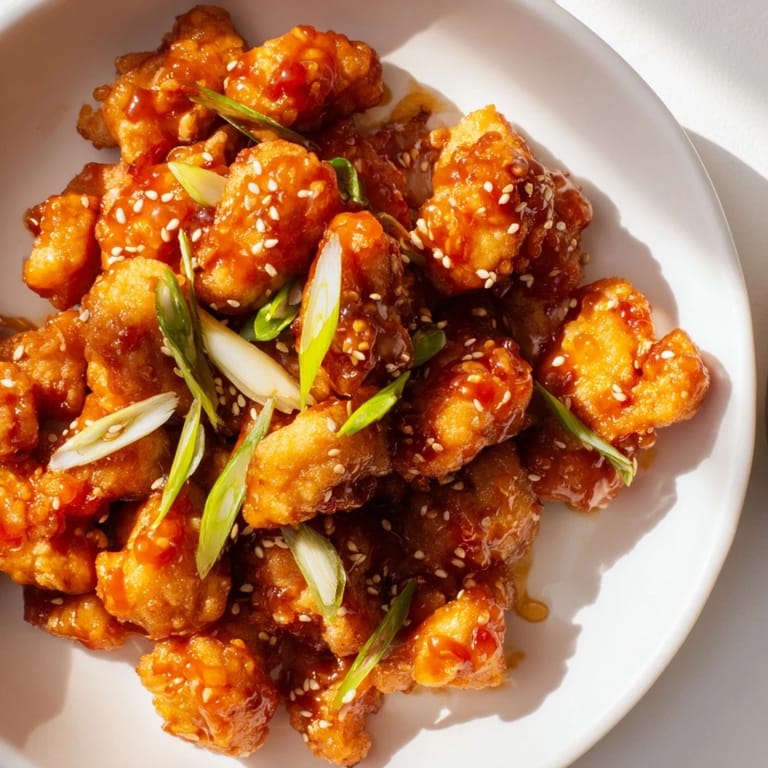
 My first orange chicken experiment happened on a Tuesday night when I was craving that specific takeout flavor but didn't want to leave the house. I had just bought some beautiful chicken thighs at the market and a bag of fresh oranges, and something about them sitting on my counter together felt like a sign. The result was golden, glossy, and honestly better than any delivery container I'd opened before. Now this dish is my go-to when I want restaurant-quality food without the wait or the grease-stained bag.
I made this for friends one weekend and watched them go completely silent the first bite, just chewing slowly with their eyes closed. One of them actually asked if I'd secretly ordered it from somewhere fancy. That moment convinced me that good food doesn't need a restaurant kitchen or complicated techniques, just honest ingredients and a little attention while things cook.
Ingredients
- Boneless, skinless chicken thighs (600 g, bite-sized): Thighs stay juicier than breasts when fried, and the smaller pieces cook through perfectly without the edges burning.
- Eggs (2 large): Your binding agent that helps the coating stick like it's meant to be there.
- Cornstarch and all-purpose flour (60 g each): The cornstarch is what keeps things extra crispy, not just the flour alone.
- Salt and black pepper (1/2 tsp each): Season the coating so every bite has flavor, not just the sauce.
- Vegetable oil for frying: You need enough to submerge the chicken; shallow frying won't give you that shatter-when-you-bite texture.
- Fresh orange juice (180 ml from about 2 oranges): Fresh is genuinely different from concentrate; it makes the entire sauce taste brighter and more alive.
- Orange zest (2 tbsp): Those little flecks add bursts of flavor and look beautiful on the plate.
- Soy sauce (60 ml): This adds the umami backbone that makes the sauce feel sophisticated instead of just sweet.
- Granulated sugar (60 g): Measure this carefully; too much and you're making candy instead of a balanced sauce.
- Rice vinegar (2 tbsp): The acid that cuts through the richness and keeps your palate wanting more.
- Hoisin sauce (1 tbsp): A secret depth that makes people ask what's in here.
- Garlic and ginger (2 cloves minced, 1 tsp grated): These two together create that warm, aromatic base that makes the sauce feel authentic.
- Red pepper flakes (1/2 tsp, optional): Just a whisper of heat; this isn't about setting your mouth on fire.
- Cornstarch slurry (1 tbsp cornstarch mixed with 2 tbsp water): This is what transforms a thin sauce into something that clings to the chicken beautifully.
- Spring onions and sesame seeds (for garnish): These feel optional until you taste how they add freshness and nuttiness to each bite.
Tired of Takeout? 🥡
Get 10 meals you can make faster than delivery arrives. Seriously.
One email. No spam. Unsubscribe anytime.
Instructions
- Set up your stations:
- Before you touch the oil, have three bowls ready: one with beaten eggs, one with your cornstarch and flour mixture, and one empty for the coated pieces. Having everything prepped means you won't be fumbling around once the oil gets hot, and the coating won't get soggy waiting for you to catch up.
- Coat the chicken properly:
- Dip each piece into egg first, let the excess drip off, then roll it in the flour mixture with your fingers, pressing gently so the coating sticks. If a piece seems under-coated, give it a second pass through the egg and flour; it's worth the extra second.
- Get your oil to temperature:
- Use a thermometer if you have one; 175°C (350°F) is the sweet spot where the chicken cooks through without burning on the outside. If you don't have a thermometer, a piece of bread should sizzle immediately and turn golden in about 60 seconds.
- Fry in batches:
- Don't crowd the pan; overcrowding drops the oil temperature and you'll end up with greasy chicken instead of crispy. Work in two or three batches and let each piece have its own space to become gorgeous and golden.
- Build your sauce with care:
- Combine everything except the cornstarch slurry in your saucepan and let it come to a gentle simmer while your chicken finishes frying. You want to taste the individual flavors starting to blend but not evaporate away.
- Thicken at the last moment:
- Pour in that cornstarch slurry slowly while stirring constantly; stop as soon as the sauce looks glossy and coats the back of a spoon. Over-stirring or cooking too long turns it into something closer to glue.
- Bring it all together:
- Add the hot chicken to the hot sauce and toss gently for about two minutes, just enough for everything to coat and heat through without the outside getting weird.
- Serve immediately:
- Transfer to a platter, scatter your garnishes over the top, and get it to the table while the chicken is still at its crispiest. This is not a dish that improves sitting in a warm bowl.
 Pin It
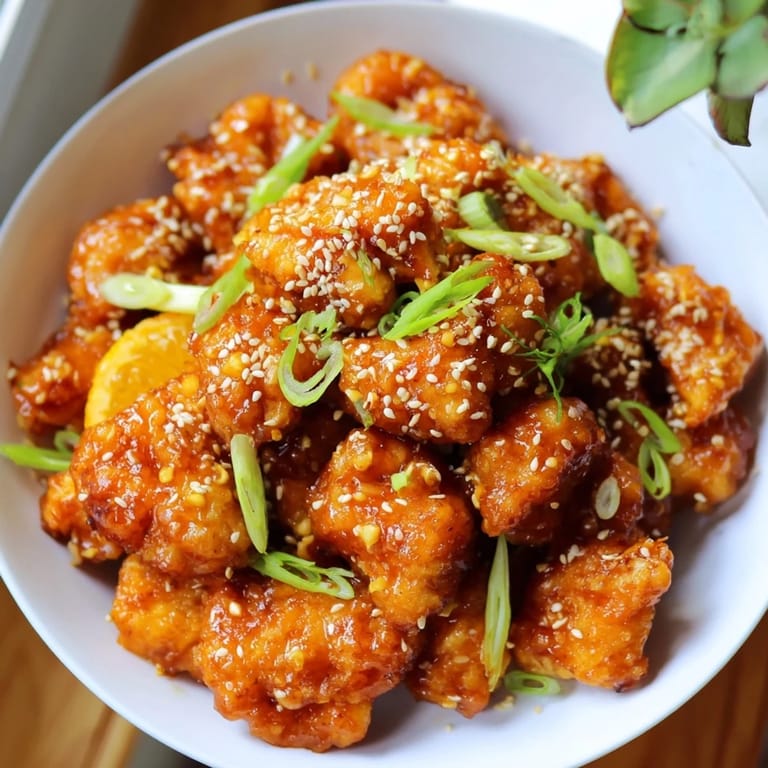
 There's something magical about the moment you pull golden, crispy chicken out of hot oil and hear it crackle. Then you pour that glossy orange sauce over it and suddenly your kitchen smells like a really good restaurant, and you remember why you fell in love with cooking in the first place.
Making It Your Own
Once you nail the basic recipe, you can play around with it. Some nights I add a pinch more ginger because I'm in that mood, or I throw in some thinly sliced red chili if I want heat. The framework stays solid, but the flavors can shift based on what's in your pantry and what your palate is craving on any given Tuesday.
What to Serve Alongside
I usually make jasmine rice because it's fragrant and neutral enough to let the orange chicken be the star, but fried rice works beautifully too if you want something richer. Steamed broccoli or a simple stir-fried vegetable on the side keeps things balanced and adds color to the plate without competing for attention.
Storage and Leftovers
This dish is genuinely best eaten fresh, while the chicken is still crispy, but I know life happens and sometimes you have leftovers. Store the chicken and sauce separately in the fridge for up to three days, then gently reheat the sauce on the stove and crisp the chicken briefly in a 200°C oven before combining them.
- If you're planning ahead, you can prep the chicken all the way through frying the day before, then make the sauce fresh and combine them just before serving.
- The sauce alone keeps for about a week and is delicious over roasted vegetables, rice, or even grilled tofu if you want a different protein.
- Freeze the uncooked coated chicken pieces in a single layer, then transfer them to a bag once frozen; fry from frozen, adding just a minute or two extra time.
 Pin It
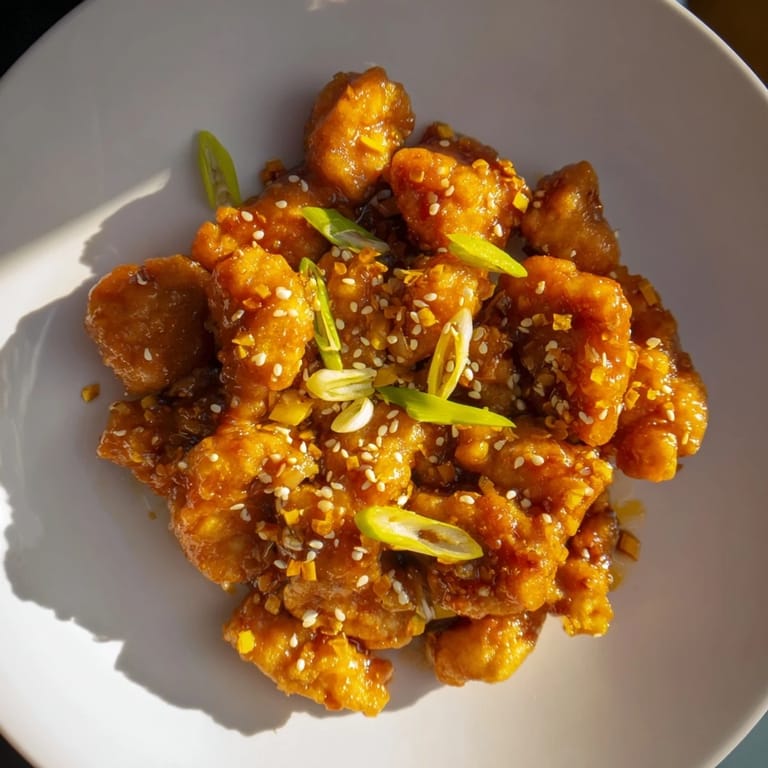
 This orange chicken brings that comforting, satisfied feeling you get from your favorite takeout place, except it's better because you made it. That combination of crispy, glossy, tangy, and slightly sweet is honestly addictive, and now you know exactly how to make it whenever you want.
Questions & Answers
- → How do I get the chicken extra crispy?
Coating the chicken pieces in a mixture of cornstarch and flour before frying helps achieve a golden, crunchy texture. Frying in hot oil at 175°C (350°F) ensures even crispiness.
- → Can I bake the chicken instead of frying?
Yes, baking at 220°C (425°F) for 20–25 minutes offers a lighter option while still producing tender, flavorful chicken pieces.
- → What gives the sauce its tangy flavor?
The combination of fresh orange juice, zest, and rice vinegar creates a bright, tangy base that's balanced by soy sauce and a hint of sweetness.
- → Can I adjust the spiciness of the dish?
Crushed red pepper flakes are optional and can be omitted or adjusted based on your heat preference without compromising the dish's flavor.
- → What sides pair well with this chicken preparation?
Steamed jasmine rice, fried rice, or sautéed vegetables like broccoli or bell peppers complement the tangy and savory notes of the dish perfectly.
- → How do I prevent the sauce from becoming too thick?
Adding the cornstarch slurry slowly and cooking the sauce just 1–2 minutes helps achieve a glossy, smooth consistency without over-thickening.