 Pin It
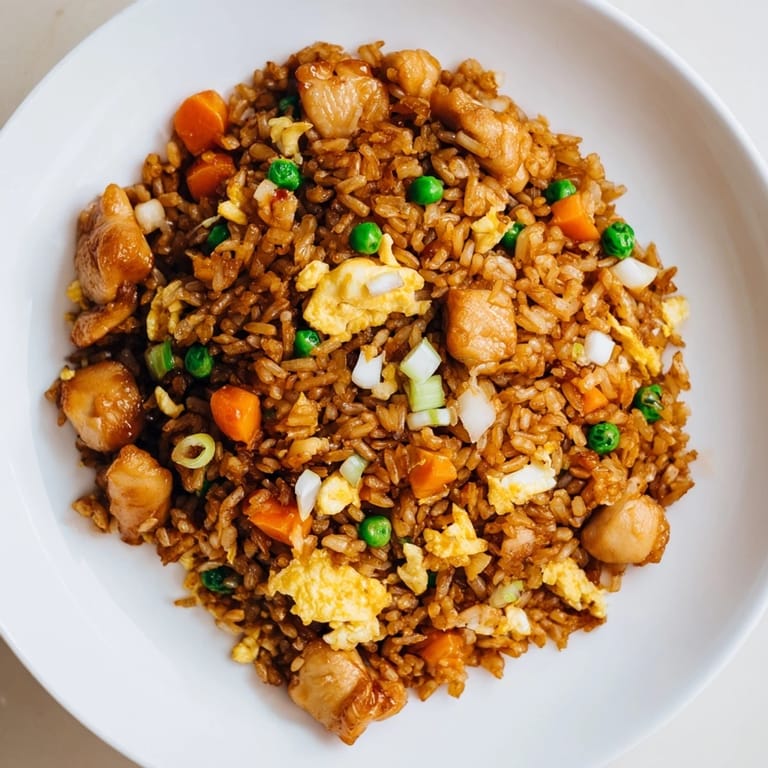
 There's something about the sound of a wok hitting high heat that tells me dinner is about to come together fast. My neighbor once mentioned she made chicken fried rice in the time it took her kids to finish their homework, and I realized she'd cracked the code to what feels like a restaurant meal but costs a fraction of the price. The magic isn't in fancy technique—it's in having everything ready before the pan gets hot, then letting the rice and proteins do their thing with some good soy sauce and the warmth of sesame oil bringing it all home.
I learned to make this properly when my partner came home exhausted on a Tuesday and I had exactly thirty minutes before we needed to eat. The wok was screaming, the rice was already golden, and by the time the eggs hit the pan, I understood why this dish shows up in busy weeknight rotations everywhere. That night it wasn't fancy—just rice, chicken, and a flash of heat—but it felt like the most resourceful thing I'd cooked that week.
Ingredients
- Boneless, skinless chicken breast or thigh, diced (300 g): Thighs stay more tender, but breasts work just fine if you keep the pieces small and don't leave them on the heat too long.
- Large eggs (2): They scramble into tender ribbons that distribute throughout the rice like built-in creaminess.
- Medium carrot, diced (1): The natural sweetness balances the soy sauce, and dicing small means it softens in minutes.
- Frozen peas (100 g): Already cooked, they just need warming—no reason to thaw them separately.
- Small onion, finely chopped (1): Fine pieces soften completely and release their sweetness into the wok.
- Spring onions, sliced (2 plus extra for garnish): Add them near the end so they stay fresh and bright against the warm rice.
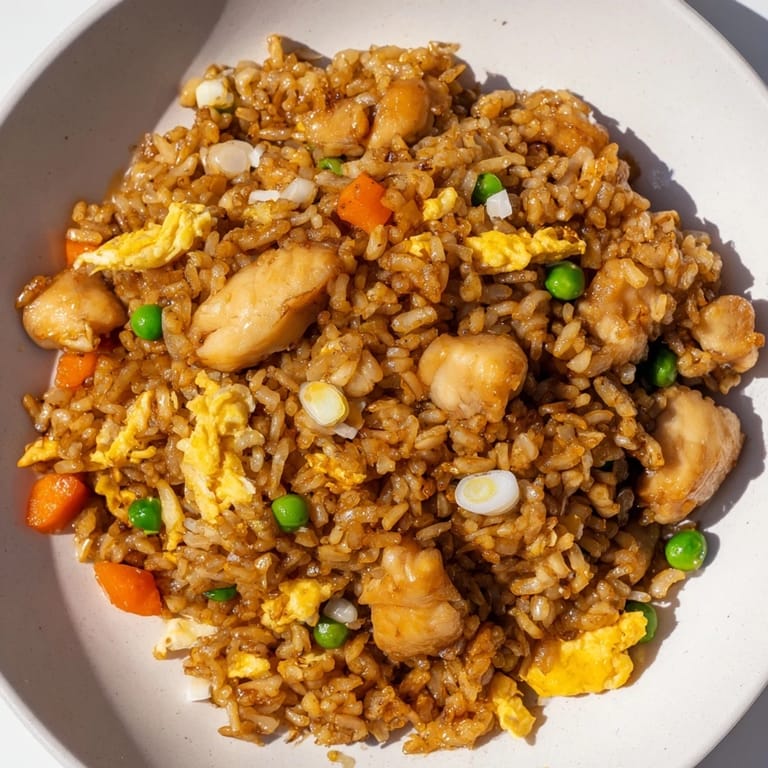
- Cooked jasmine or long-grain rice, preferably day-old (500 g): Day-old rice doesn't steam—it stays separate and fluffy, which is the whole secret to this working.
- Soy sauce (3 tbsp): The backbone of flavor that makes everything taste intentional.
- Oyster sauce, optional (1 tbsp): Adds a subtle savory depth, but the dish works beautifully without it.
- Sesame oil (1 tsp): Just a drizzle at the end brings everything into focus with its warm, nutty finish.
- Ground white pepper (1/2 tsp): Subtler than black pepper and dissolves more smoothly into hot rice.
- Salt, to taste: Always taste at the end because soy sauce varies by brand in its saltiness.
- Vegetable oil, divided (2 tbsp): Keep the oil hot so everything cooks quickly and stays crisp rather than steaming.
Tired of Takeout? 🥡
Get 10 meals you can make faster than delivery arrives. Seriously.
One email. No spam. Unsubscribe anytime.
Instructions
- Set everything in place:
- Dice the chicken, prepare all vegetables, crack the eggs into a bowl, and measure out your seasonings. A wok moves fast, and there's no time to find soy sauce once things start cooking.
- Cook the chicken until it's golden:
- Heat 1 tbsp oil over medium-high heat until it shimmers, then add the diced chicken. Let it sit a moment before stirring so it builds color, about 4–5 minutes total. Remove it to a bowl once it's cooked through.
- Soften the vegetables:
- Add the remaining 1 tbsp oil to the wok, then scatter in the onion and carrot. Let them soften for 2–3 minutes, stirring occasionally so they start to caramelize at the edges.
- Add the peas and eggs:
- Stir in the peas to warm them through, then push everything to the side of the wok. Pour in the beaten eggs and let them sit for a moment before scrambling gently until they're just set, with soft curds rather than a cooked-through sheet.
- Bring the rice into the heat:
- Add all the rice to the wok and stir constantly, breaking up any clumps with the back of your spatula. You're looking for every grain to warm through and get a slight kiss of color from the pan, about 3–4 minutes.
- Return the chicken and season:
- Add the cooked chicken back in along with soy sauce, oyster sauce if using, sesame oil, white pepper, and a pinch of salt. Stir everything together for 2–3 minutes until the flavors are evenly distributed and the whole dish is steaming hot.
- Finish with spring onions:
- Stir in the fresh spring onions at the very end so they stay bright and crisp. Taste everything and add more soy sauce or salt if it needs it—seasoning is always the final adjustment.
 Pin It
 Last winter I made this for a friend who was going through a rough stretch, and she told me later that having something warm and quick that actually tasted like care meant more than a fancier meal would have. That's when I realized fried rice isn't just about speed—it's about showing up with something that feels both attentive and unpretentious.
Why Day-Old Rice Changes Everything
The first time I tried fried rice with fresh-cooked rice, I ended up with something between porridge and a stir-fry, and I couldn't figure out what I'd done wrong until someone explained that moisture is the enemy of that perfect separated, slightly crispy texture. Now I plan ahead and either make rice the night before or spread fresh rice out on a sheet pan to cool and dry for a few hours. When the rice hits that hot wok, it fries instead of steams, and suddenly you understand why this dish tastes like restaurant food.
The Protein Question
Chicken is reliable and accessible, but this recipe is genuinely flexible because the technique itself is what matters. I've made it with shrimp on nights when I wanted something lighter and faster, with pork when I was feeling something richer, and with tofu on quieter evenings when I wanted to keep things simple. The soy sauce and sesame oil work equally well with anything, so don't feel locked into chicken just because that's how it starts.
Small Changes That Matter
The beauty of fried rice is that it responds to what you have on hand, and small additions turn a basic meal into something that feels a bit more intentional. Bell peppers add sweetness and color, corn brings a different kind of sweetness, and bean sprouts give you a fresh crunch that contrasts with the soft rice. There's also something about serving it with chili sauce or extra soy sauce on the side—it gives everyone at the table permission to make it their own, which somehow makes the whole meal more relaxed.
- Don't overcrowd the wok, or everything steams instead of fries.
- If you find yourself with too much rice in the pan, work it in batches rather than forcing it.
- The whole recipe comes together in about thirty minutes from start to finish if everything's prepped first.
 Pin It
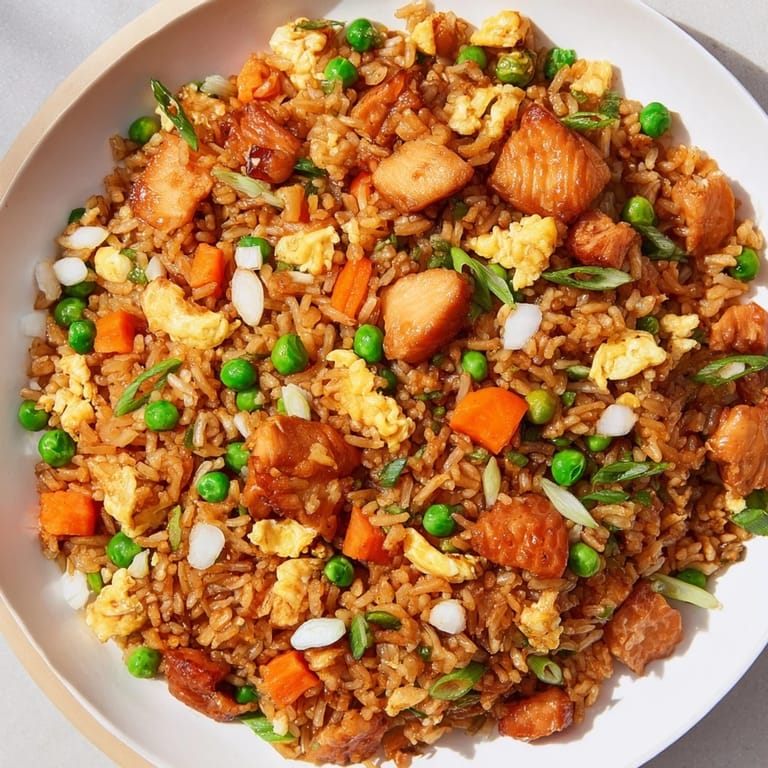
 This is the kind of meal that teaches you how to cook with intention rather than instruction. Once you understand the rhythm—heat, protein, vegetables, rice, season—you'll make it without thinking, adjusting on the fly based on what's in your kitchen and what you're craving that night.
Questions & Answers
- → What type of rice works best?
Day-old jasmine or long-grain rice is ideal as it is dryer, preventing clumps and achieving a better stir-fry texture.
- → Can I use other proteins besides chicken?
Yes, shrimp, pork, or tofu make excellent alternatives and can be cooked similarly to the chicken.
- → How do I prevent eggs from overcooking?
Scramble eggs briefly until just set, then immediately mix with the other ingredients to keep them tender.
- → What is the role of oyster sauce in this dish?
Oyster sauce adds a subtle sweetness and umami depth, but it’s optional based on preference or allergies.
- → Can I add extra vegetables?
Definitely! Adding bell peppers, corn, or bean sprouts enhances texture and flavor balance.