 Pin It
 I discovered California rolls not in California, but at a tiny sushi counter in my neighborhood where the chef would assemble them with this meditative focus, rice grains perfectly arranged, each roll identical yet somehow personal. There was something about watching those ingredients come together—the creamy avocado yielding under pressure, the crab catching the light—that made me want to learn the technique myself. My first attempt was messy and chaotic, but the taste was pure comfort, a bridge between what I loved about sushi and what my American palate craved. Now, making these rolls has become my answer to the question of what to bring to gatherings where people aren't quite sure about raw fish.
I remember the first time I made these for my sister, who'd been intimidated by sushi her whole life, and watching her reach for a second roll without thinking about it was somehow more satisfying than any fancy dinner I'd cooked. She said the avocado reminded her of something homey, and the way the sesame seeds caught between her teeth made her laugh, and suddenly this very Japanese dish felt like something we'd invented together in our kitchen.
Ingredients
- Sushi rice (1 ½ cups): The foundation of everything—use actual sushi rice, not regular white rice, because the starch content is different and makes all the difference in how it holds together and tastes.
- Water (2 cups): Rinse your rice thoroughly until the water runs completely clear; this removes excess starch and prevents gluey, mushy results.
- Rice vinegar (2 ½ tbsp): This acidic seasoning gives sushi rice its characteristic subtle tang and helps preserve the grains' individual texture.
- Sugar and salt (1 tbsp and ¾ tsp): These balance the vinegar and season the rice throughout, so every bite tastes intentional.
- Crabmeat or surimi (120 g): Real crab has delicate sweetness, but imitation crab is reliable, affordable, and honestly tastes wonderful in these rolls; shred it finely so it distributes evenly.
- Avocado (1 ripe one): Choose avocados that yield slightly to pressure; too hard and they won't spread smoothly into your roll, too soft and they turn to mush.
- Cucumber (½ one): Peel and seed it so the strips stay crisp and don't release water that will make your roll soggy.
- Mayonnaise (2 tbsp): Optional, but it adds richness and helps bind the filling; use sparingly so it doesn't overwhelm the other flavors.
- Nori sheets (4): Store these in a cool, dry place because humidity makes them lose their crispness and structural integrity.
- Toasted sesame seeds (2 tbsp): Toast them yourself if you can; they taste fresher and nuttier than pre-toasted versions.
Tired of Takeout? 🥡
Get 10 meals you can make faster than delivery arrives. Seriously.
One email. No spam. Unsubscribe anytime.
Instructions
- Prepare the rice foundation:
- Rinse your sushi rice under cold running water, stirring gently with your fingers until the water runs clear instead of cloudy—this step prevents the grains from sticking into a gummy mass. Combine the rinsed rice with water in a saucepan, bring to a boil, then cover and let simmer low for exactly 15 minutes, which cooks the rice through without making it mushy.
- Season while warm:
- While the rice is still hot, fold in your vinegar-sugar-salt mixture gently so each grain gets coated without breaking apart. Let it cool to room temperature; this is crucial because warm rice will stick too much to your hands and the nori.
- Set up your rolling station:
- Lay your bamboo mat on a clean surface, cover it with plastic wrap so rice doesn't stick to the wood, and place one sheet of nori shiny side down on top. Have a small bowl of water nearby for moistening your hands and sealing the rolls.
- Spread rice with control:
- Wet your hands slightly and spread about ¾ cup of rice evenly over the nori, leaving a 2 cm border at the top untouched—this gives you something to seal with. The rice layer should be thin enough that you can still see the nori underneath.
- Seed and flip:
- Sprinkle your sesame seeds across the rice, then place a plate or cutting board over the nori and carefully flip the whole thing so the rice is now facing down and the nori is facing up.
- Arrange and fill:
- Lay your crab, avocado, and cucumber in a horizontal line along the bottom edge of the nori, keeping the pile relatively thin so it won't burst out when you roll. Add a thin line of mayo if you're using it.
- Roll with intention:
- Lift the bottom edge of the mat with your fingers and use it to fold the nori over the filling, then keep rolling firmly but gently away from you, using the mat to create tension and shape. When you reach the top, seal that bare border with a little water so it sticks and stays closed.
- Slice cleanly:
- Use a very sharp knife dipped in water to slice the roll into 6 pieces, wiping the blade clean between cuts; a dull knife will squeeze the roll and destroy your careful work.
- Plate and serve:
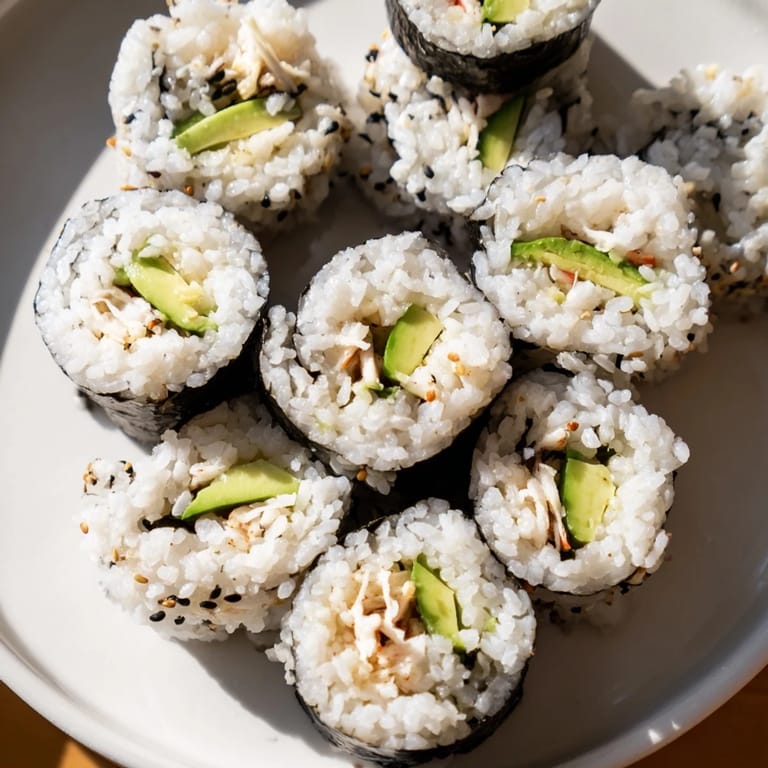
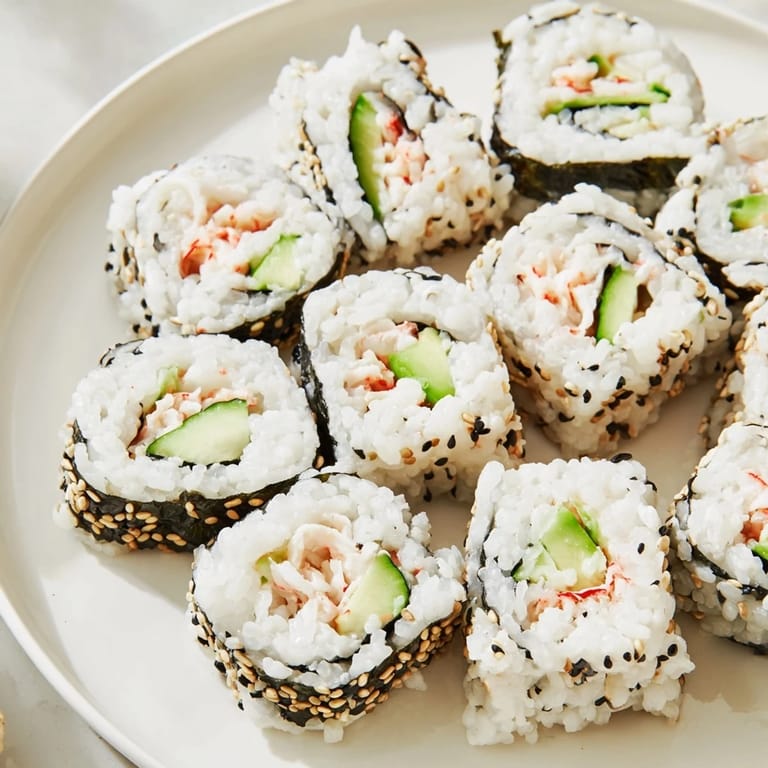
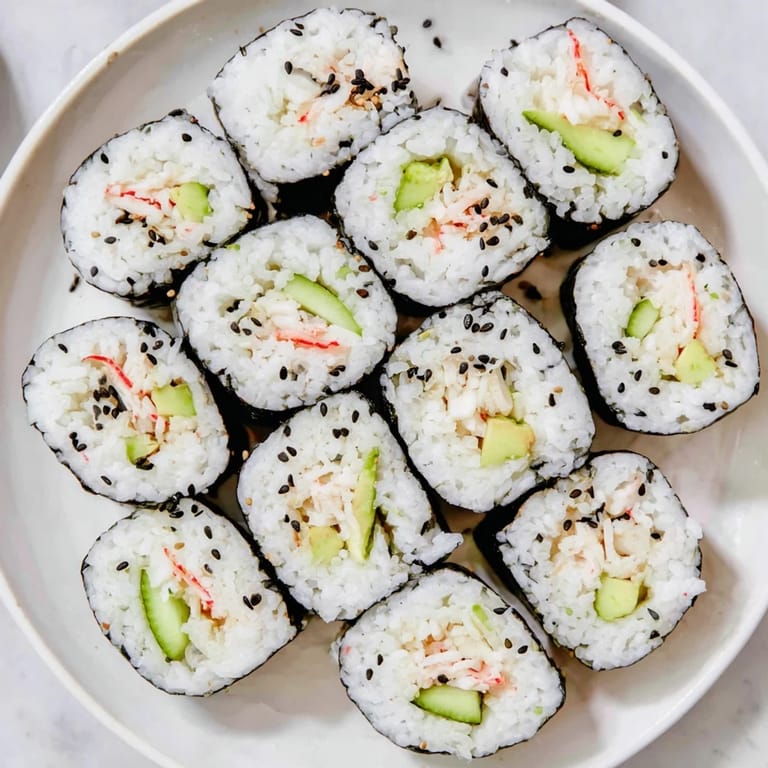
- Arrange your pieces seam side up so people see that beautiful cross-section, and serve with small dishes of soy sauce, pickled ginger, and wasabi for dipping and customizing.
 Pin It
 There's a moment during every roll-making session where my hands understand the motion without my brain directing them, where the mat becomes an extension of my hands and the filled nori transforms into something whole and contained. It's the same feeling as kneading bread or folding dough, and that's when I know these rolls will turn out right.
Why These Rolls Feel Special
California rolls represent something genuinely Japanese-American in the best way—they honor sushi technique and ingredients while being completely honest about adaptation and preference. The genius of putting the rice on the outside is that it protects the delicate nori and lets people who are cautious about seaweed still enjoy the roll. Making these at home means you control the quality of every component, using real crab if you want it or surimi if that makes more sense for your budget, and exactly as much mayo as feels right to you.
Perfecting Your Rolling Technique
The rolling motion itself is learned through repetition rather than instruction; your hands need to feel what tight but not strangling pressure feels like, how much filling is too much, and how to sense when the roll is sealed properly without squeezing until it bursts. Start by practicing with extra rice and simple fillings, because early rolls will be imperfect, but each one teaches you something about tension and control. After a few attempts, your hands will remember, and suddenly you're turning out restaurant-quality rolls without thinking about the steps.
Building Your Own Flavor Combinations
Once you understand the structure of a basic California roll, you can swap components based on what's fresh or what sounds good—tempura shrimp instead of crab, mango alongside avocado, or a drizzle of sriracha mayo for heat. The beauty of learning this technique is that you're not bound to one recipe; you're learning a method that works with whatever ingredients inspire you. Some of my best rolls have come from looking in the fridge and thinking about what textures and flavors would complement each other.
- Try adding crispy elements like toasted panko or thin strips of carrot for texture variety.
- Experiment with different mayo mixtures—sriracha, wasabi, or even a touch of ginger stirred in changes everything.
- Remember that the rice exterior is edible seasoning; toasted sesame, poppy seeds, or even very finely chopped nori flakes on the outside add visual interest and flavor.
 Pin It
 Making California rolls is one of those skills that feels impossible until suddenly it isn't, and then it becomes a gift you can give to people—the confidence that homemade sushi is entirely within reach. There's something generous about rolling these by hand, knowing exactly what's inside, and sharing them with people you care about.
Questions & Answers
- → What type of crab is best for California rolls?
Fresh cooked crabmeat or imitation crab (surimi) works well, offering a sweet and delicate flavor that pairs nicely with creamy avocado.
- → How do you prepare sushi rice for rolls?
Rinse sushi rice until water runs clear, then cook with water. After cooking, fold in a mixture of rice vinegar, sugar, and salt for flavor and balance.
- → Can the mayonnaise in the filling be omitted?
Yes, mayonnaise is optional and can be left out for a lighter, cleaner taste without affecting the overall texture.
- → What tools are needed to roll sushi properly?
A bamboo sushi rolling mat covered with plastic wrap helps shape the roll evenly and tightly, while a sharp, damp knife ensures clean slices.
- → What are common serving accompaniments for this roll?
Typically served with soy sauce, pickled ginger, and wasabi to enhance flavors and add contrasting tastes.
- → Are there vegetarian alternatives for this roll?
Yes, substitute crab with extra avocado, cucumber, or tofu for a plant-based variation that maintains fresh textures.